
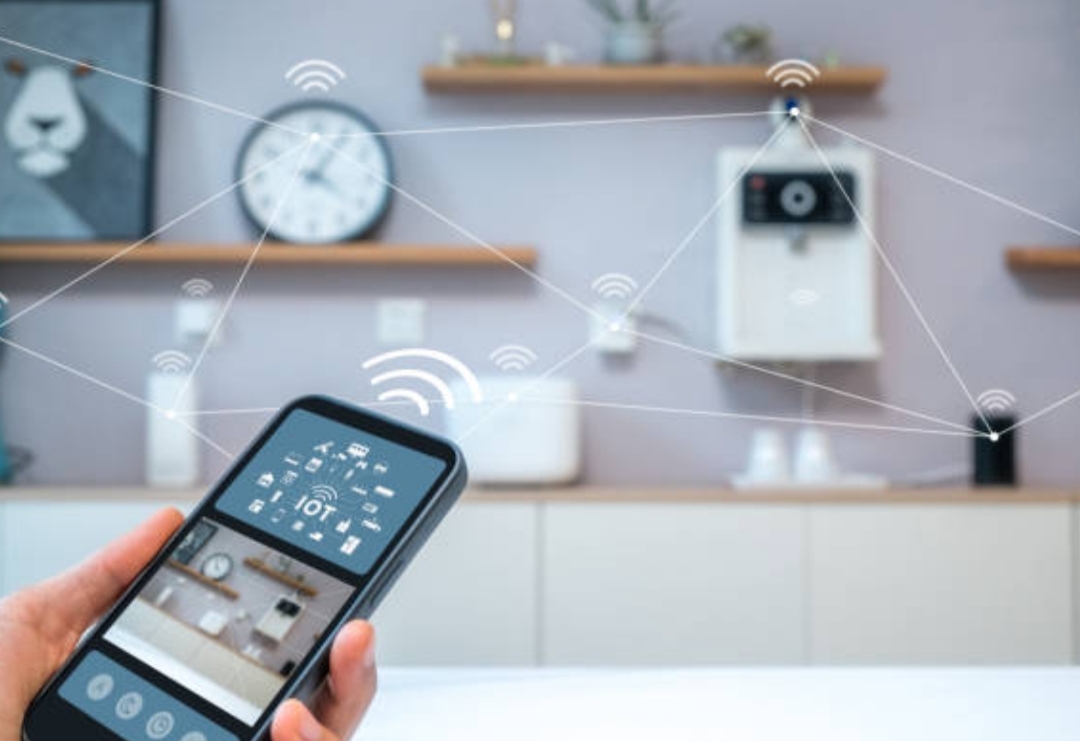
Embracing the Internet of Things in Modern Living
In today’s rapidly evolving technological landscape, the Internet of Things (IoT) has emerged as a transformative force, revolutionizing the way we interact with our homes and daily environments.
By seamlessly integrating IoT devices into our living spaces, we’re witnessing the dawn of smart home technology that offers unparalleled convenience, efficiency, and control.
The concept of the Internet of Things refers to a network of interconnected devices that communicate and exchange data with each other over the internet.
These devices range from everyday household items like refrigerators and thermostats to more complex systems like security cameras and lighting controls.
By embedding sensors and software into these objects, they become “smart,” capable of collecting data, learning user preferences, and making autonomous decisions to enhance our living experience.
Smart home technology leverages IoT to create an ecosystem where devices work in harmony to provide a more comfortable and secure living environment.
For instance, a smart thermostat can learn your schedule and adjust the temperature accordingly, while smart lights can be programmed to turn on or off based on your presence or time of day. These innovations not only offer convenience but also contribute to energy savings and increased home security.
The proliferation of IoT devices has been fueled by advancements in wireless communication, cloud computing, and artificial intelligence.
As these technologies continue to evolve, the capabilities of smart home systems are expanding, offering more personalized and intuitive experiences for users.
However, with the integration of IoT into our homes, it’s essential to consider aspects like data privacy, device compatibility, and cybersecurity.
Ensuring that your smart home devices are secure and that your personal data is protected should be a priority as you embrace this technology.
In this comprehensive guide, we’ll delve deeper into the components of smart home technology, explore popular IoT devices, discuss the benefits and challenges of integrating IoT into your home, and look ahead to future trends in this dynamic field.
Whether you’re a tech enthusiast or a homeowner looking to modernize your living space, understanding the Internet of Things is the first step toward creating a smarter, more connected home.
🌐 Introduction to the Internet of Things (IoT)
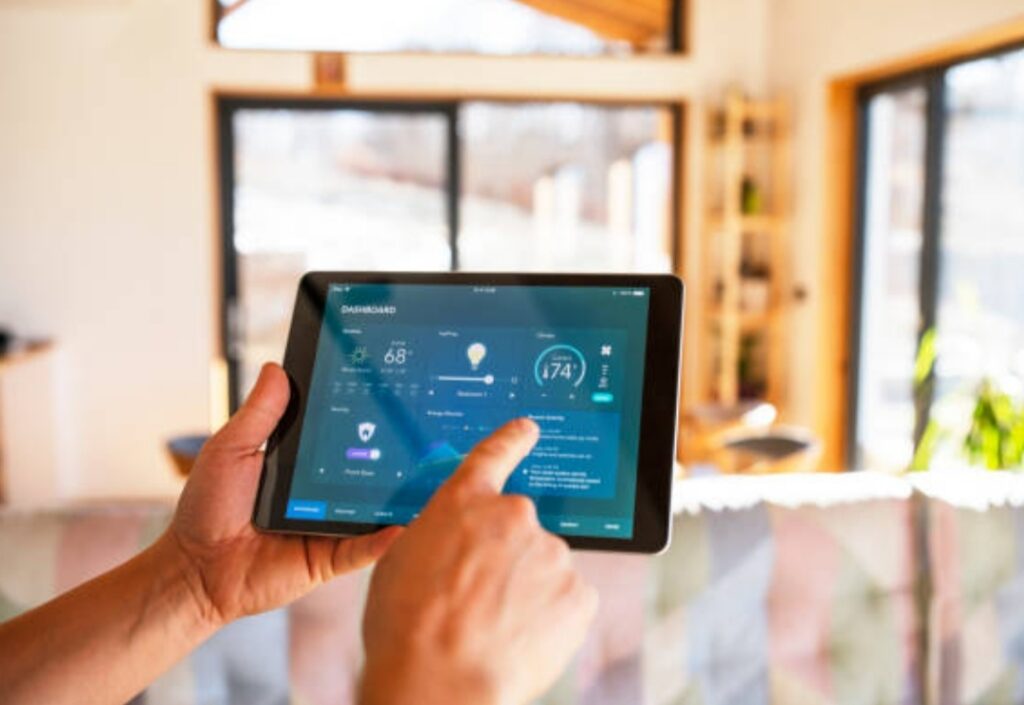
🤖 What is IoT? (Definition and explanation of IoT)
The Internet of Things (IoT) is a revolutionary concept that refers to the interconnected ecosystem of physical devices embedded with sensors, software, and technologies that communicate and exchange data over the internet.
From everyday gadgets like smart speakers and IoT-enabled lights to advanced industrial machinery, IoT spans every corner of modern life.
In simpler terms, any device that can connect to the internet and interact with other devices—without human intervention—falls under the umbrella of IoT.
Imagine your smart thermostat learning your preferred room temperature and adjusting itself automatically—without you lifting a finger.
Or your smart refrigerator sending a notification when you’re low on milk.
These are not futuristic fantasies—they’re everyday realities powered by IoT devices.
As IoT becomes more widespread, these devices are getting smarter, faster, and more intuitive—creating what we now call smart home technology.
These interconnected systems don’t just automate tasks—they improve efficiency, convenience, security, and even sustainability.
Here are some everyday examples of how IoT is transforming lives:
- Smart security systems that detect motion and alert you via smartphone
- Voice-controlled assistants like Alexa or Google Assistant for hands-free operation
- Smart lighting systems that save energy based on real-time activity and daylight sensors
- Wearable health monitors that track fitness and vital signs in real time
The true power of the Internet of Things lies in data.
These devices collect and analyze data continuously, allowing systems to become predictive and proactive—rather than just reactive.
🔐 Pro Tip: Always choose devices with strong data encryption protocols and regular firmware updates to ensure your smart home stays secure. Best-Selling IoT Security Devices
🏠 Evolution of IoT in Smart Homes
The evolution of IoT in smart homes is one of the most exciting technological advancements in the last two decades.
It began with basic home automation systems in the early 2000s—such as programmable thermostats and automatic lights.
But back then, these systems were costly, complex, and disconnected.
Fast forward to today, and the game has changed completely.
Thanks to innovations in cloud computing, Wi-Fi, artificial intelligence, and mobile app development, modern smart home technology is not only more affordable—it’s also incredibly user-friendly and accessible.
Here’s a brief timeline of IoT’s journey into our homes:
- 2008: The term Internet of Things gained popularity as the number of internet-connected devices surpassed the global human population.
- 2011-2013: Introduction of voice assistants like Siri, Google Now, and later Amazon Alexa ushered in the first real mainstream interaction with IoT in homes.
- 2014-2016: Launch of Google Nest, SmartThings, and other smart hubs made it possible to connect multiple devices across platforms.
- 2018-Present: Introduction of AI-powered IoT devices, integration with cloud platforms like AWS and Google Cloud, and growing adoption of interoperability standards like Matter.
Today, IoT devices are no longer seen as luxury—they’re becoming essential tools for smart living.
According to a 2025 forecast by Statista, the number of IoT-connected devices globally is expected to exceed 38.6 billion, with smart homes accounting for a significant portion of this number.
🏡 Smart homes are no longer the future—they’re the present.
From smart locks and video doorbells to AI-driven cleaning robots, IoT technology is simplifying everyday tasks and turning ordinary homes into intelligent ecosystems.
Here’s how IoT continues to evolve in smart homes:
- 🌟 Cloud-based integration: Control devices from anywhere using your phone
- 🧠 AI-driven learning: Devices adapt to your routines and preferences
- 🌍 Sustainability: Smart homes use less energy and help lower your carbon footprint
- 🔄 Interoperability: New standards like Matter allow devices from different brands to work seamlessly
⚡ Ready to upgrade your living space?
→ Explore top-rated smart home bundles and start building your intelligent home today!
🔧 Key Components of Smart Home Technology
Your smart home is only as powerful as the components that bring it to life.
From intuitive hubs to responsive sensors and robust communication protocols, every piece of the puzzle plays a vital role in creating a truly connected living space.
In this section, we’ll break down the essential elements that make up modern smart home technology, focusing on smart home hubs, IoT devices, and connectivity standards like Zigbee, Z-Wave, Wi-Fi, and Matter.
Whether you’re just getting started or looking to upgrade your setup, understanding these building blocks will help you create a reliable, future-proof smart home ecosystem.
Let’s dive into the heart of the Internet of Things (IoT) in residential settings.
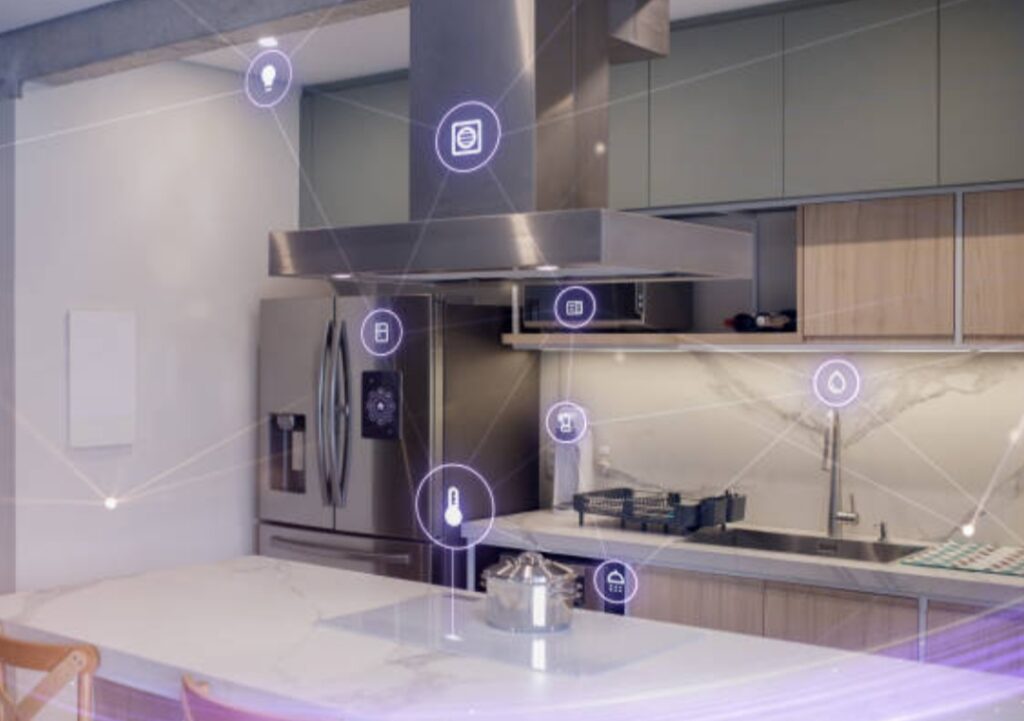
🧠 Smart Home Hubs and Controllers
(Role of hubs like Samsung SmartThings, Amazon Echo, and Google Nest Hub in integrating IoT devices)
Think of smart home hubs as the brains behind your IoT ecosystem.
They act as central controllers, managing communication between your various smart devices and ensuring everything runs smoothly from one interface.
Instead of opening multiple apps to control your smart lights, thermostat, or security system, a hub consolidates all those devices into one easy-to-manage platform.
Here are some of the top smart home hubs leading the market:
- Amazon Echo (with Alexa): Great for hands-free control using voice commands. Works seamlessly with a wide range of smart home devices.
- Google Nest Hub: Ideal for users in the Google ecosystem. Offers visual feedback, routines, and integration with Google Assistant.
- Samsung SmartThings: Highly versatile. Compatible with Z-Wave, Zigbee, and Wi-Fi devices. Ideal for users who want a centralized control point with broader compatibility.
These hubs can:
- Automate tasks like turning off lights when you leave the room
- Connect multiple IoT devices and create scenes or routines
- Allow voice interaction for hands-free convenience
- Provide remote access via smartphone apps
🔥 Want to control your entire home with one tap—or better yet, just your voice?
→ Check out these best-selling smart home hubs to get started.
🔍 Smart Sensors and Devices
(Overview of sensors: motion, temperature, humidity, and their applications)
Smart sensors are the backbone of any intelligent home system.
They gather data from the environment and communicate with other IoT devices to automate actions and deliver real-time insights.
These tiny yet powerful gadgets bring efficiency, security, and comfort to a whole new level.
Let’s break down some of the most essential types:
📡 Motion Sensors
- Detect movement in rooms or entry points
- Trigger lights, alarms, or cameras when unexpected motion is detected
- Useful for home security and energy savings
🌡️ Temperature Sensors
- Monitor room temperature
- Communicate with thermostats and HVAC systems to adjust heating or cooling
- Ideal for maintaining comfort while reducing energy costs
💧 Humidity Sensors
- Measure moisture levels in the air
- Help prevent mold, maintain indoor air quality, and protect wooden furniture
- Often paired with dehumidifiers or smart HVAC systems
🚪Contact Sensors
- Detect when doors or windows are opened or closed
- Used for security and to automate lights or climate control based on entry activity
These sensors are often plug-and-play and connect via Wi-Fi, Zigbee, or Z-Wave.
Combined with a smart home hub, they create a web of interoperable devices that respond automatically to your environment and preferences.
Upgrade your home’s IQ with advanced motion and environmental sensors—perfect for families, seniors, and energy-conscious homeowners.
📶 Connectivity Protocols
(Explanation of Wi-Fi, Zigbee, Z-Wave, and the emerging Matter standard)
Behind every responsive IoT device is a connectivity protocol that enables it to communicate with others.
Each protocol has unique strengths, and knowing the difference helps ensure that your smart home setup is both stable and scalable.
📡 Wi-Fi
- Most common protocol
- High-speed communication and easy setup
- Ideal for cameras and high-bandwidth devices
- Drawback: Can strain your router when too many devices are connected
🌀 Zigbee
- Low power consumption
- Creates a mesh network—devices relay signals to each other, extending range
- Highly reliable for low-bandwidth devices like lights and sensors
- Requires a hub (e.g., SmartThings, Amazon Echo 4th Gen)
🔁 Z-Wave
- Similar to Zigbee but uses different frequency (908 MHz, less interference)
- Excellent range—up to 100 meters line-of-sight
- Works best with home security and lighting systems
- Compatible with fewer devices than Zigbee or Wi-Fi
🌐 Matter (New Standard)
- The future of smart home interoperability
- Open-source protocol backed by Apple, Google, Amazon, and others
- Allows devices from different brands to work together easily
- Offers local control (less latency), strong security, and flexibility
- Devices with Matter certification ensure cross-platform compatibility
⚠️ Why This Matters: Choosing the right protocol determines how well your devices communicate and whether they’ll work together in the future.
🎯 Pro Tip:
When buying new devices, look for “Works with Matter” or “Zigbee compatible” to ensure broader integration. Browse Matter-certified products
🧩 What Makes a Smart Home Truly Smart?
A reliable smart home setup is built on:
- A central hub to manage and automate tasks
- Smart sensors to interact with your environment
- Robust connectivity protocols to ensure everything talks to each other seamlessly
These core components work together to deliver a home that’s not just connected—but truly intelligent.
Ready to transform your home into a responsive, futuristic space?
→ Explore complete smart home kits that include everything you need to get started—fast and hassle-free!
Popular IoT Devices Enhancing Modern Living
Welcome to the future of connected convenience.
Smart homes aren’t a far-off dream—they’re here, and they’re revolutionizing the way we live.
From intelligent lighting to voice-controlled assistants, IoT devices are elevating our daily routines with automation, efficiency, and peace of mind.
In this section, we’ll explore the most popular smart home technologies currently dominating modern households and how each plays a crucial role in enhancing your everyday lifestyle.
Whether you’re new to Internet of Things innovation or upgrading your setup, these top-tier devices deserve a spot in your smart home arsenal.

Smart Lighting Systems
(Features of Philips Hue and LIFX smart bulbs)
Smart lighting systems are among the first IoT upgrades many homeowners choose—and for good reason. They add ambiance, enhance security, and can help reduce energy costs.
Two of the top players in this space are Philips Hue and LIFX.
Philips Hue Features:
- Customizable lighting scenes (romantic, energizing, relaxing, etc.)
- Voice control compatibility with Alexa, Google Assistant & Apple HomeKit
- Geofencing – lights turn off when you leave home
- Scheduling – automate your lights based on time or sunrise/sunset
- Expandable ecosystem – from light strips to outdoor bulbs
LIFX Features:
- No hub required – connects directly to Wi-Fi
- 16 million color options
- Advanced automation routines
- Integrates with IFTTT, Alexa, Siri, Google Assistant
These systems also support energy efficiency, reducing power consumption by adapting light levels automatically.
Smart Thermostats
(Benefits of devices like Google Nest Thermostat in energy management)
Imagine your home adjusting its temperature based on your habits. That’s the power of smart thermostats like Google Nest Thermostat and ecobee.
These devices optimize your heating and cooling schedule, saving energy while maximizing comfort.
Google Nest Thermostat Key Benefits:
- Learns your schedule and programs itself
- Adjusts automatically when you’re away (Eco Mode)
- Remote control from your smartphone
- Provides energy usage reports
- Supports zoned climate control in larger homes
Energy Efficiency Bonus:
Smart thermostats can save homeowners up to 15% on cooling and 10–12% on heating annually, according to independent studies.
Zivzu and other smart home marketplaces offer affordable options to start building your energy-efficient setup.
⭐ Want to lower your energy bill without lifting a finger?
→ Explore smart thermostat deals at Zivzu for a smarter, greener home.
Smart Security Solutions
(Use of Arlo Pro 4 cameras, August Smart Locks, and motion detectors for home security)
Smart home security systems combine IoT innovation with peace of mind. From smart locks to intelligent cameras, today’s security tech offers protection that’s proactive, not reactive.
Top Devices Enhancing Home Security:
- Arlo Pro 4 Camera:
- 2K HDR video with night vision
- Motion detection alerts with AI-powered person/animal/package identification
- Built-in siren and spotlight
- Weather-resistant design for outdoor use
- 2K HDR video with night vision
- August Smart Lock Pro:
- Lock/unlock your door remotely
- Auto-lock and unlock as you come and go
- Integrates with Google Assistant, Alexa, and Apple HomeKit
- Keep track of who enters and exits with 24/7 access logs
- Lock/unlock your door remotely
- Smart Motion Detectors:
- Trigger lights, alarms, or cameras when unusual motion is detected
- Can send instant alerts to your phone
- Works great with both indoor and outdoor zones
- Trigger lights, alarms, or cameras when unusual motion is detected
These tools not only deter intruders but also allow homeowners to monitor their properties from anywhere.

Smart Appliances
(Integration of appliances like Samsung Family Hub Refrigerator and LG ThinQ Washing Machine)
Smart appliances are transforming kitchens and laundry rooms into command centers of convenience.
With IoT connectivity, appliances are no longer dumb machines—they’re interactive assistants that adapt to your lifestyle.
Samsung Family Hub Refrigerator:
- Built-in touchscreen for shopping lists, calendar sync, and more
- Cameras inside let you check fridge contents remotely
- Integrated with Bixby, Samsung’s voice assistant
- Displays recipes and syncs with other smart devices
LG ThinQ Washing Machine:
- Customize wash cycles remotely
- Sends cycle completion notifications to your phone
- AI-based fabric care to reduce wear and tear
- Works with Google Assistant & Alexa
These innovations save time, prevent waste, and simplify household chores through seamless integration.
Voice Assistants
(Functionality of Amazon Alexa, Google Assistant, and Apple Siri in controlling smart homes)
Voice assistants are the gatekeepers of your smart home experience.
With just a few words, you can control lights, lock doors, set reminders, stream music, and more.
Let’s look at the top three assistants:
Amazon Alexa
- Works with over 100,000+ smart home devices
- Supports skills to expand functionality (like games, meditation, etc.)
- Create routines like: “Alexa, Good Morning” to turn on lights, start coffee, and read the news
Google Assistant
- Deep integration with Google services (Calendar, Gmail, Maps)
- Powerful voice recognition across household members
- Works with Nest devices for smart home automation
- Offers seamless Chromecast integration for voice-controlled streaming
Apple Siri (via HomeKit)
- Best for Apple ecosystem users
- End-to-end encryption for privacy
- Can trigger actions via your iPhone, Apple Watch, or HomePod
- Supports shortcuts for powerful automation
Voice assistants tie your entire smart home together, offering hands-free control and intelligent suggestions based on your usage patterns.
→ Want full voice control over your smart home?
Explore the latest smart speakers and displays powered by Alexa, Google, or Siri now.
⚡ Final Thoughts on IoT Devices That Enhance Daily Life
The most effective smart home isn’t about having the most gadgets—
It’s about selecting well-integrated IoT devices that make your life simpler, smarter, and safer.
From intelligent lighting and temperature control to voice-activated convenience and automated security, these technologies offer a glimpse into a future where your home works for you, not the other way around.
→ Ready to build your dream smart home? Start with these best-rated IoT devices to revolutionize the way you live—one connected gadget at a time.
Benefits of Integrating IoT in Your Home
Welcome to the world where convenience meets intelligence.
By integrating Internet of Things (IoT) devices into your living space, you’re not just upgrading to “smart home technology”—you’re unlocking a lifestyle that’s safer, greener, and more efficient.
Let’s break down the real-world advantages that come with embracing this connected revolution.
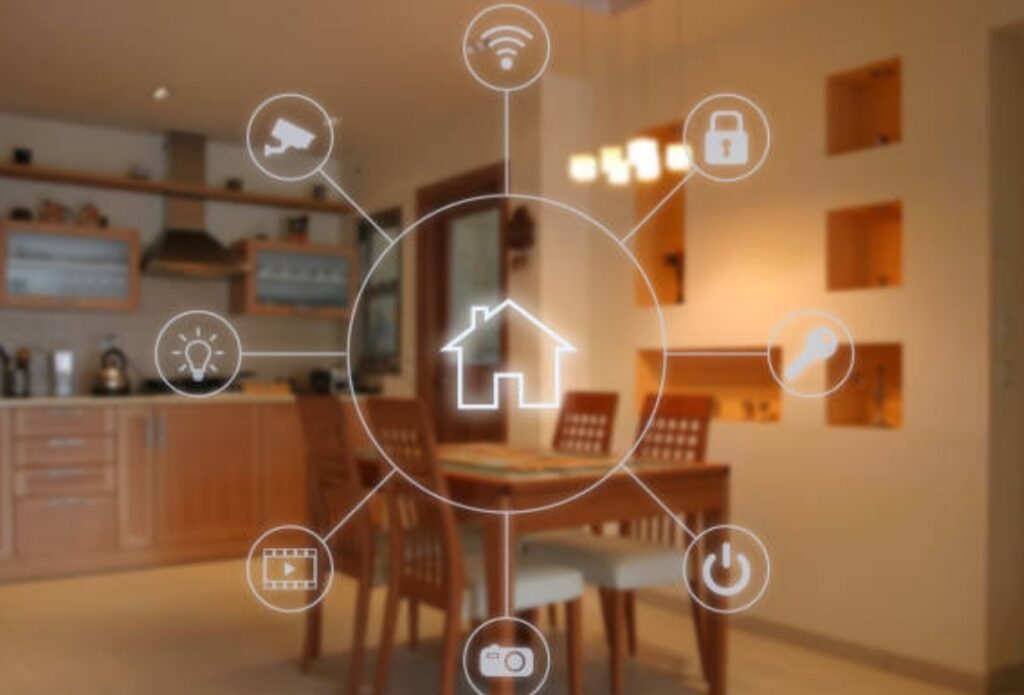
Enhanced Energy Efficiency and Cost Savings
One of the most powerful benefits of IoT in smart homes is its ability to reduce energy waste and cut down monthly utility bills.
Smart thermostats, for example, like the Google Nest or ecobee, learn your preferences and adjust the temperature automatically when you’re away.
Smart lighting systems, like Philips Hue or LIFX, can be set to turn off during daylight hours or when no motion is detected—slashing unnecessary energy use.
Other examples of energy-saving IoT devices include:
- Smart plugs that schedule appliance usage
- Energy-monitoring smart meters to track power consumption
- Automated window shades that adjust based on sunlight
According to the U.S. Department of Energy, smart thermostats alone can save up to 10–12% on heating and 15% on cooling bills annually.
Power Phrase: Less waste. More control. More money in your pocket.
Improved Home Security and Peace of Mind
Home security is no longer limited to locks and alarms.
With IoT-driven smart home security systems, you get real-time control, visibility, and alerts—whether you’re home or away.
Some security-focused IoT devices include:
- Arlo Pro 4 cameras with AI-powered motion detection and 2K HDR video
- Smart locks like August and Yale that allow remote locking and unlocking
- Video doorbells with facial recognition
- Window/door sensors to alert you of break-ins
- Automated sirens and smart floodlights
These devices offer features like:
- 24/7 monitoring
- Remote access via your phone
- Integration with emergency services
- Two-way communication with visitors at your door
Pro Tip: Use routines that trigger lights and audio cues when motion is detected at night—an effective deterrent for intruders.
Unmatched Convenience and Automation
With IoT, your home does the work—so you don’t have to.
Thanks to automation routines, your devices can perform actions without manual input.
Examples of automation you can set up include:
- When you say “Good Morning”, your assistant turns on the lights, starts the coffee maker, and reads the news.
- When your smart lock detects your arrival, it disarms your alarm system, unlocks the door, and sets the thermostat to your favorite setting.
- When motion is detected at night, exterior lights automatically turn on.
This level of hands-free automation is possible with voice assistants like Alexa, Siri, or Google Assistant, working in sync with other smart home technology.
Real-Time Monitoring and Remote Access
The power of IoT lies in being connected—wherever you are.
Smart home technology gives you full control over your home environment from your smartphone, even if you’re halfway around the world.
- Check who’s at your door via your smart doorbell
- Turn off appliances left on by mistake
- Adjust your thermostat on your way home from work
- Get notifications for leaks, smoke, or unusual activity
IoT devices offer real-time data and insights, allowing you to react quickly and make informed decisions.
Use Case Example:
Forgot to turn off the lights after leaving home? Simply open your smart home app and switch them off in seconds.
Health, Wellness, and Accessibility Improvements
Beyond security and convenience, IoT devices can also support health, comfort, and accessibility, especially for seniors or individuals with disabilities.
Top smart wellness tools include:
- Air quality monitors that detect pollutants and allergens
- Smart beds that adjust positions and track sleep quality
- Smart wearables that sync with home systems (e.g., lights dim automatically at bedtime)
- Voice assistants that help with medication reminders, calling contacts, or reading news aloud
In smart homes for aging individuals, systems like fall detection, automated lighting, and remote caregiver access make living independently easier and safer.
Power Phrase: Technology that not only connects—but cares.
Increases Property Value and Appeal
With more buyers looking for tech-savvy homes, adding IoT devices can boost your home’s market value.
In fact, a survey by Coldwell Banker shows that 81% of buyers say they would be more interested in a home with smart home features pre-installed.
IoT investments offer benefits beyond your daily living:
- Improved energy ratings
- Stronger selling points in real estate listings
- Long-term ROI from reduced utility costs
If you’re considering selling or renting out your property in the future, a smart home setup makes your listing stand out in a competitive market.
⚡ Quick Recap: The Advantages of IoT in Homes
| Benefit | Examples |
| Energy Savings | Smart thermostats, lighting, plugs |
| Security | Smart locks, cameras, motion sensors |
| Convenience | Voice control, automation, routines |
| Monitoring | Remote access, real-time alerts |
| Health & Wellness | Air quality sensors, smart beds |
| Property Value | Market appeal, modern home features |
→ Ready to experience these powerful benefits for yourself?
Build your ultimate smart home setup now with the latest IoT devices that offer comfort, security, and next-level control.
Challenges and Considerations in IoT Adoption
As exciting and beneficial as the Internet of Things (IoT) and smart home technology can be, it’s essential to look at both sides of the coin.
Adopting IoT devices into your living space isn’t without challenges.
To make informed decisions and optimize your connected lifestyle, let’s explore the most common concerns—along with practical ways to address them.

Privacy and Data Security Risks
One of the top concerns when integrating IoT into the home is data privacy and security.
Every smart device connected to your network collects, stores, and sometimes shares data—from your daily routines to your voice commands.
Risks include:
- Unauthorized access (hacking) of devices like smart locks or cameras
- Data leaks from poorly secured devices or outdated firmware
- Third-party tracking of user habits and behaviors for advertising purposes
Real-world example:
In 2023, a vulnerability in a popular baby monitor brand allowed hackers to spy on families remotely—highlighting the urgent need for better device security.
Tips to stay protected:
- Change default passwords immediately after setup
- Use two-factor authentication (2FA) where possible
- Keep firmware and apps regularly updated
- Use a secure Wi-Fi connection and consider network segmentation (create a separate network for IoT devices)
Pro Tip: Install a smart home firewall or IoT security software like Bitdefender Box to add a layer of protection to all your connected gadgets.
→ Protect your smart home with trusted cybersecurity tools that keep your personal data safe and your peace of mind intact.
Compatibility and Interoperability Issues
The rapidly growing smart home market can be a double-edged sword.
While we have more IoT options than ever, not all devices speak the same “language.”
Some devices only work within a specific ecosystem—such as:
- Google Nest vs. Apple HomeKit vs. Amazon Alexa
- Smart sensors that use Zigbee or Z-Wave, but aren’t compatible with your hub
- Appliances that don’t support Matter—the new standard aiming to unify smart home communication
Result? Frustrating limitations and disjointed user experiences.
Solution:
Before purchasing, always check for:
- Matter compatibility (future-proof and ecosystem-agnostic)
- Support for IFTTT (If This Then That) for broader automation
- Compatibility with your smart hub or voice assistant
Power Phrase: A truly smart home is a unified home.
Initial Costs and ROI Concerns
Let’s face it—smart home technology isn’t always cheap.
The upfront cost of IoT devices and installations can be a barrier for some homeowners.
Examples of expenses include:
- Smart thermostat: $100–$250
- Smart lighting system (multi-room): $200+
- Home security setup with cameras and sensors: $500+
- Professional installation (optional): $200–$1,000
While these prices may seem steep, they should be viewed as investments.
Long-term ROI includes:
- Monthly energy savings
- Insurance discounts for added security
- Increased home resale value
Cost-saving tips:
- Start small: Begin with essential devices like smart bulbs and plugs
- Look for bundles and seasonal deals
- Take advantage of government or energy provider rebates (e.g., rebates for smart thermostats)
Learning Curve and User Experience
Smart home technology should simplify life—not complicate it.
But for beginners, learning how to connect and manage multiple devices can feel overwhelming.
Common issues include:
- Struggling to sync devices with your hub or app
- Setting up automation routines that don’t work as intended
- Misunderstood voice commands
Solution:
Choose products with:
- Intuitive mobile apps and clear instructions
- Beginner-friendly voice integration
- Good customer support and active community forums
Bonus Tip:
Try out platforms like Home Assistant or SmartThings which offer central dashboards for simplified management.
Network Dependency and Reliability
Because IoT devices rely heavily on your home internet, any Wi-Fi downtime can temporarily cripple your smart home.
Common problems:
- Devices going offline
- Lag in automation triggers
- Reduced performance when bandwidth is stretched
Solutions to improve reliability:
- Invest in a dual-band mesh Wi-Fi system (like Eero or Google Nest WiFi)
- Use devices with offline/local processing capabilities
- Enable local backups or manual controls in critical devices like locks and thermostats
Environmental Impact and Device Lifecycle
While IoT devices often promote sustainability and energy efficiency, we can’t ignore the environmental footprint of the hardware itself.
Concerns include:
- E-waste from rapidly obsolete devices
- Battery disposal for sensors and remotes
- Energy consumption from cloud-based operations
How to reduce impact:
- Choose devices with long firmware support
- Look for ENERGY STAR-certified or eco-conscious brands
- Recycle old gadgets through proper e-waste programs
Is Your Home Ready for the Smart Leap?
Adopting the Internet of Things isn’t just a tech upgrade—it’s a shift in lifestyle.
From automated lighting to real-time home monitoring, smart home technology opens a world of possibilities.
But here’s the truth:
Like any innovation, success lies in education, strategic planning, and thoughtful implementation.
→ Start small, dream big—discover smart home bundles that fit your needs and budget and begin your journey toward a truly intelligent home.
Future Trends in IoT and Smart Home Innovation
The Internet of Things (IoT) is not a static technology—it’s evolving rapidly.
What we see today is just the tip of the iceberg.
The future of smart home technology is being shaped by powerful trends that will redefine how we live, work, and connect with our surroundings.
In this section, we’ll uncover the most groundbreaking innovations and what’s coming next for IoT devices and the smart homes of tomorrow.
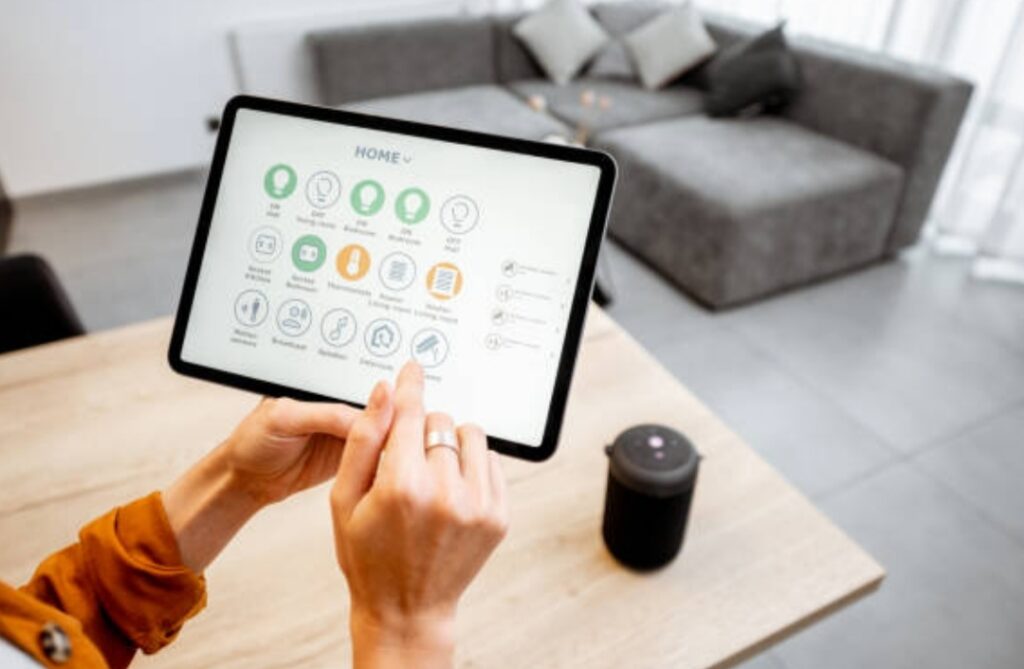
AI-Driven Personalization and Predictive Automation
Artificial Intelligence (AI) is the brain behind many smart devices.
But what’s next? Hyper-personalized smart experiences based on your habits, preferences, and routines.
Upcoming advancements include:
- Predictive automation: Your home learns when to dim the lights, adjust the thermostat, or start the coffee machine—without you lifting a finger
- Emotion-sensing environments: Lighting, music, and temperature change based on your mood using biometric feedback
- AI-powered security: Facial recognition and behavioral analytics to detect anomalies in real time
Example: Google Nest’s new AI model can predict when you’re on your way home based on location + calendar + weather, adjusting your environment accordingly.
Imagine a home that doesn’t just respond—but anticipates.
The Rise of Matter and Seamless Device Interoperability
Matter, developed by the Connectivity Standards Alliance (CSA), is revolutionizing the smart home game.
What is Matter?
It’s a new universal standard that allows smart devices from different brands to work together effortlessly—no more compatibility headaches.
Benefits of Matter:
- Cross-platform compatibility (Google, Amazon, Apple, Samsung, etc.)
- Improved security standards
- Faster device pairing and setup
- Local processing for faster performance and better privacy
Why this matters (pun intended):
Your IoT devices will no longer be restricted by brand or ecosystem.
You’ll be able to choose the best tools for your lifestyle, without compromise.
Power Tip: When buying new devices, look for the “Matter-compatible” badge to future-proof your smart home.
Smart Cities and Urban IoT Integration
The future isn’t just about smart homes—it’s about smart communities and cities.
Urban IoT infrastructure is already taking shape in major metros around the world.
Coming innovations:
- Connected traffic systems that adapt to real-time flow
- Smart waste bins that signal when they’re full
- Environmental sensors monitoring air quality, noise, and temperature
- Public safety IoT for emergency response and surveillance
These integrations will impact homeowners, too—think about energy grid optimization, smarter public transport, and faster emergency services.
→ Be part of the smart revolution—equip your home for the future of connected living.
Sustainable and Eco-Friendly Smart Homes
As climate awareness grows, so does the demand for green technology in the smart home space.
What’s trending:
- Energy-efficient appliances that adjust usage based on demand
- Water-saving IoT irrigation systems for gardens
- Smart solar panels and battery storage connected to your home grid
- IoT-powered carbon footprint tracking for your household
Highlight:
LG and Samsung are working on AI-driven fridges and washers that reduce waste, detect food spoilage, and optimize water usage.
Augmented Reality (AR) and Virtual Interfaces
Smart homes won’t just be physical—they’ll be interactive digital environments.
AR/VR applications include:
- Using AR glasses to control your home by looking at appliances
- Virtual dashboards where you can walk through and adjust your home layout
- Holographic projections to show energy use or incoming calls in real-time
Example:
Companies like Nreal and Meta are already developing AR interfaces that let you control your home environment with just gestures or eye movement.
Health-Focused IoT Solutions
Health is becoming a central focus for smart living.
Coming advancements:
- Smart beds that monitor sleep patterns and breathing
- IoT-enabled air purifiers that adjust based on indoor air quality
- Medication management devices with voice reminders and dosage tracking
- Smart mirrors that analyze skin health and recommend routines
Fun Fact:
Some smart toilets in development can detect early signs of illness through waste analysis.
Your smart home could be your next wellness coach.
The Expansion of 5G and Edge Computing
The rollout of 5G networks and edge computing is set to supercharge IoT capabilities.
What this means:
- Ultra-fast, low-latency communication between devices
- Edge processing allows devices to make decisions instantly, without waiting for cloud data
- Real-time video processing, automation, and AI responses become smoother and more reliable
Use case:
A smart security system using 5G and edge AI can detect a stranger at your door, alert you, and lock down access—all in milliseconds.
Prepare Your Home for the Smart Future
The world of smart home technology and the Internet of Things (IoT) is advancing at lightning speed.
From AI personalization to green energy, the future is brighter, smarter, and more connected than ever before.
→ Upgrade to future-ready IoT devices now and transform your home into a smarter, safer, and more sustainable haven.
With the right knowledge and devices, your home won’t just be smart—it will be brilliant.
How to Get Started with IoT in Your Home (Beginner’s Guide)
So you’re ready to dive into the world of smart home technology?
Whether you’re a total beginner or just looking to upgrade your setup, this section will walk you through everything you need to know—step by step.
No fluff. No confusion.
Just clear, actionable guidance to help you bring the power of the Internet of Things (IoT) into your living space.
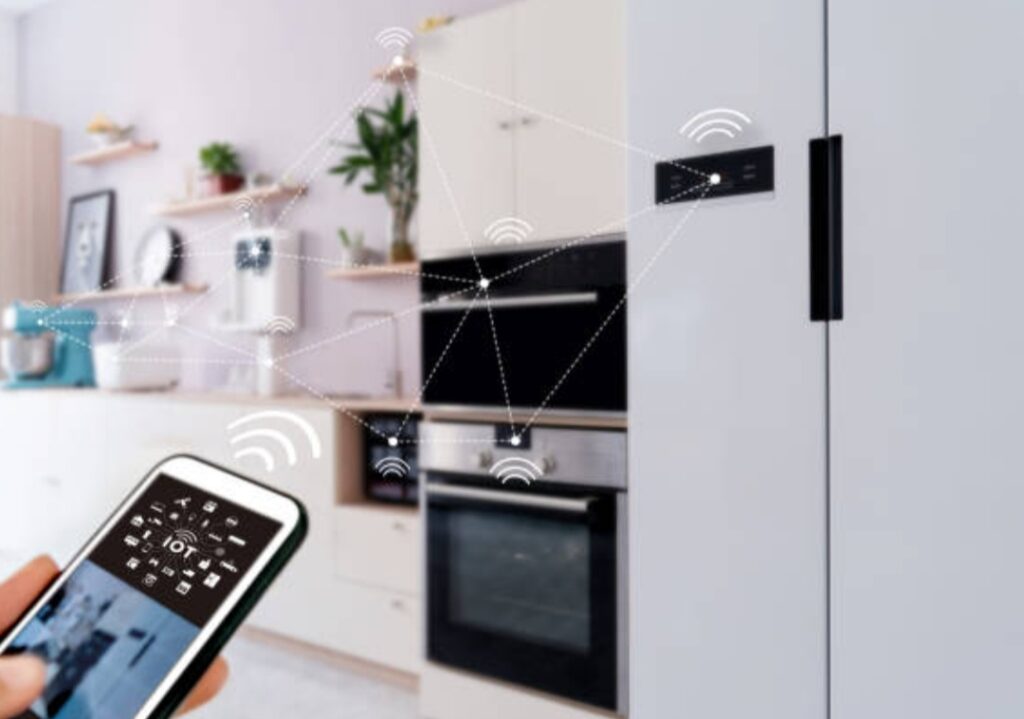
Step 1 – Evaluate Your Needs and Lifestyle
Before buying anything, take a moment to ask:
- What’s your daily routine like?
- Do you want to save energy, boost security, or just enjoy hands-free control?
- Are there elderly family members or kids who would benefit from automation?
Examples of common goals:
- Convenience: Automate lights, locks, and appliances
- Security: Install cameras, motion sensors, smart locks
- Energy Efficiency: Use smart thermostats and plugs
- Entertainment: Streamline your media systems with voice assistants
Pro Tip: Write down what you want to improve or automate in your home. This will guide your product choices.
Step 2 – Choose a Smart Home Ecosystem
Your IoT devices need a common language.
This is where choosing a central ecosystem becomes crucial.
Top Smart Home Platforms:
| Ecosystem | Compatible Devices | Voice Assistant |
| Amazon Alexa | Wide range, affordable | Alexa |
| Google Home | Great with Android, Nest devices | Google Assistant |
| Apple HomeKit | Best for Apple users | Siri |
Important: Make sure the devices you choose work with your preferred ecosystem.
→ Explore smart devices compatible with your ecosystem to avoid tech headaches.
Step 3 – Invest in a Smart Hub or Controller
A smart hub is like the brain of your smart home.
It helps different devices talk to each other, especially when they use different protocols like Zigbee, Z-Wave, or Matter.
Recommended Hubs:
- Samsung SmartThings – powerful, multi-protocol support
- Amazon Echo (4th Gen) – built-in Zigbee + Alexa
- Google Nest Hub Max – great display + home control features
Alternative: Some users skip the hub and manage everything via Wi-Fi + mobile apps—but this may limit your scalability.
Step 4 – Start Small With Essential Devices
Don’t overwhelm yourself—start simple.
Here are a few must-have IoT devices to begin with:
- Smart Bulbs: Philips Hue, LIFX, Wyze
- Smart Plug: TP-Link Kasa, Amazon Smart Plug
- Smart Thermostat: Google Nest, Ecobee
- Smart Lock: August Smart Lock Pro, Yale Assure Lock
- Smart Camera: Arlo Pro 4, Ring Indoor Cam
Power Tip: Choose devices that support “scenes” or routines for automated tasks.
Step 5 – Install and Configure Your Devices
Once you’ve bought your devices:
- Download the app (e.g., Alexa, Google Home, SmartThings)
- Follow setup instructions (most devices are plug-and-play)
- Connect to Wi-Fi or hub
- Name your devices clearly (e.g., “Living Room Light,” “Front Door Lock”)
- Set up automation using routines or schedules
Step 6 – Set Up Routines and Automation
Automation is where smart homes shine.
Here are a few ideas:
- Morning Routine: Lights turn on, coffee machine starts, thermostat adjusts
- Away Mode: Security system arms, unnecessary lights off
- Bedtime Mode: Lock doors, turn off lights, reduce thermostat temperature
Use voice commands or schedule tasks based on time, motion, or voice triggers.
Your home should work for you—even when you’re not thinking about it.
Step 7 – Secure Your Smart Home Network
Security is not optional in a connected world.
Best Practices:
- Use strong, unique passwords for every device and app
- Enable two-factor authentication (2FA)
- Create a separate guest Wi-Fi or IoT network
- Keep device firmware updated
- Consider using a firewall-enabled router
Recommended Routers for Smart Homes:
- ASUS RT-AX88U (Wi-Fi 6)
- Netgear Orbi Mesh Systems
- Google Nest Wi-Fi Pro
Warning: Never use the default credentials on your devices. They are easy entry points for hackers.
Step 8 – Scale Up Gradually
Once you’re comfortable, add more devices to expand functionality:
- Smart blinds, video doorbells, robot vacuums, smart appliances, air purifiers, and more.
Always ensure new additions are compatible with your hub or ecosystem.
→ Level up your smart home one device at a time and experience real convenience and control.
Security and Privacy in the IoT Era
As the Internet of Things (IoT) continues to revolutionize our daily lives—especially with the increasing use of smart home technology—it’s easy to focus on the convenience and forget about a critical aspect: security and privacy.
While your smart lights, thermostats, cameras, and voice assistants work together to create a seamless experience, they also create digital entry points that can be vulnerable if not protected.
This section uncovers the real risks, common security pitfalls, and how to fortify your smart home so that you can enjoy all the benefits without compromise.

Why Security is Crucial in IoT Devices
Every IoT device you connect—from a smart fridge to a voice assistant—is another node in your home network.
More nodes = more opportunities for hackers.
These devices often collect sensitive data, such as:
- Your daily routines
- Your home’s occupancy status
- Audio recordings from voice assistants
- Video footage from smart cameras
- Even health-related data from fitness trackers or smart beds
Real Threats Include:
- Unauthorized access to live camera feeds
- Data theft from weak or unsecured devices
- Botnet attacks (e.g., Mirai malware) that use your IoT devices to attack other websites
- Identity theft via stolen login credentials
Don’t let your smart home become a hacker’s playground.
Common Vulnerabilities in Smart Home Technology
Here’s what often goes wrong:
- Default passwords still active (e.g., “admin123”)
- Outdated firmware with known exploits
- No encryption of data in transit
- Weak router security
- Insecure third-party apps that interact with your smart home
Pro Tip: Before purchasing any IoT device, research its security features and history of software support.
Best Practices for Securing Your IoT Devices
Use these battle-tested strategies to make your smart home fortress-like:
1. Create a Dedicated IoT Network
Set up a separate Wi-Fi network for your smart devices.
This prevents an intruder from accessing your main devices (like laptops or phones) even if an IoT gadget is compromised.
Router tip: Use dual-band routers with guest network functionality or routers with VLAN support.
2. Use Strong and Unique Passwords
Never reuse the same password across your devices.
Use a password manager to generate complex, unique credentials.
Change default logins immediately after setup.
3. Enable Two-Factor Authentication (2FA)
Where available, enable 2FA for your smart home apps and hubs.
This adds an extra layer of defense even if someone guesses your password.
4. Update Firmware Regularly
Keep your devices up-to-date to patch vulnerabilities.
Enable automatic updates when possible.
Manufacturers often release security fixes silently—don’t ignore them.
5. Encrypt All Traffic
Ensure your router supports WPA3 encryption and disable older, vulnerable protocols like WEP or WPA.
If your device offers end-to-end encryption (E2EE), enable it.
Privacy Concerns with IoT Devices
It’s not just hackers you need to worry about—corporations and app developers also collect data through your IoT gadgets.
Top Privacy Risks:
- Voice recordings stored in the cloud
- Location tracking by smart speakers and phones
- Usage patterns collected by appliances (e.g., when you turn lights on/off)
- Camera footage stored on external servers
How to Mitigate Privacy Issues:
- Review privacy settings in every app
- Disable unnecessary data sharing or tracking
- Turn off microphones or cameras when not needed
- Opt for local storage over cloud storage when possible
Tools and Devices That Prioritize Privacy
Some companies go above and beyond to protect user data.
Top Privacy-First Smart Devices:
- Apple HomeKit – local processing, minimal cloud use
- Eufy Security Cameras – local storage, encrypted feeds
- Home Assistant OS – open-source smart home platform with full local control
- Firewalla or Bitdefender Box – network monitoring and IoT firewall
→ Invest in secure and privacy-focused IoT gear to protect your digital footprint.
What to Do if Your Smart Home Is Hacked
Stay calm and follow this action plan:
- Disconnect the compromised device from the network immediately
- Reset it to factory settings
- Change all associated passwords
- Run a security scan using a trusted tool (e.g., Norton, Bitdefender)
- Check all connected devices for unusual activity
- Contact the manufacturer for a support patch or device replacement
Government and Regulatory Standards for IoT Security
Governments are taking IoT security seriously.
Key Developments:
- U.S. IoT Cybersecurity Improvement Act (2020) – mandates secure IoT devices in federal use
- UK Product Security and Telecommunications Infrastructure Act (2022) – bans default passwords, requires transparency
- EU Cyber Resilience Act (Upcoming) – mandates security-by-design and lifetime support
Pro Tip: Look for certifications like UL 2900, ISO/IEC 27001, or ETSI EN 303 645 when buying new IoT products.
→ Don’t wait until it’s too late—Secure your smart home today and take back control of your privacy.
Conclusion
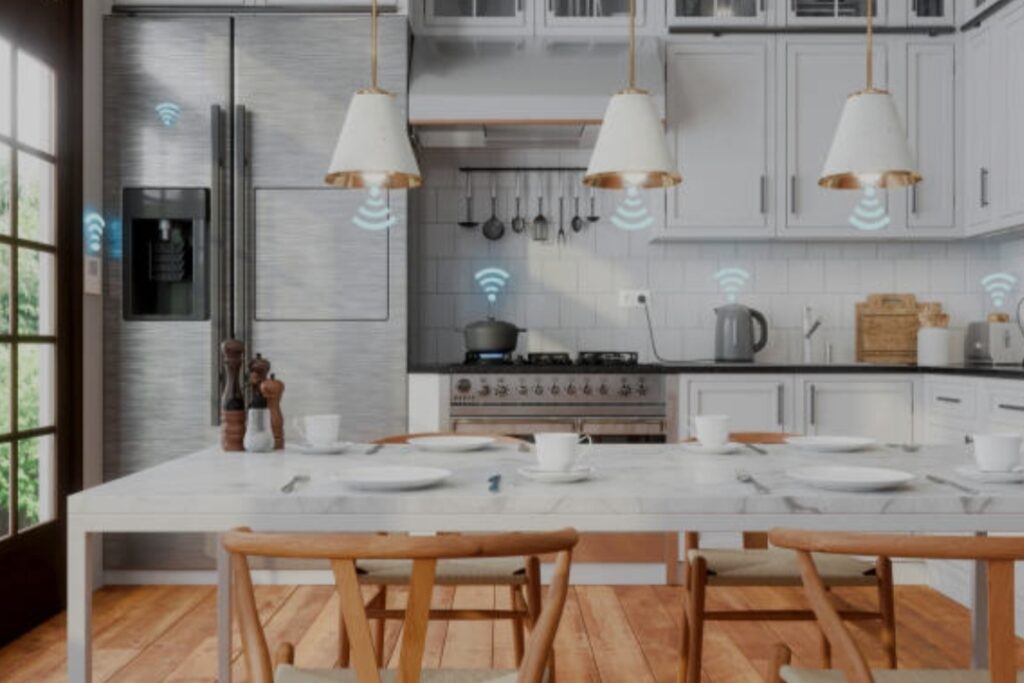
Recap of IoT’s Impact on Smart Homes
Over the past decade, the Internet of Things (IoT) has transformed the concept of home living from a passive space into an intelligent, interactive environment.
Through a growing network of IoT devices—ranging from smart lights and thermostats to advanced security systems and voice assistants—homeowners now enjoy unparalleled control, automation, and efficiency in their daily routines.
These innovations go beyond convenience.
They empower families to:
- Save on energy bills with smart thermostats
- Increase security through motion-sensing cameras and smart locks
- Enhance accessibility for elderly or disabled individuals using voice-activated systems
- Monitor environments in real-time with sensors for temperature, humidity, and even air quality
The rise of smart home technology has made it possible to create a personalized, adaptive living space that learns from your behaviors and adjusts accordingly.
And as new standards like Matter emerge, the future promises greater device interoperability, fewer setup headaches, and a more unified experience across ecosystems.
Final Thoughts on Embracing Smart Home Technology
There’s no denying it: we’re living in an era where technology is no longer a luxury—it’s an expectation.
From smart lighting that welcomes you home to AI-driven assistants that manage your schedule, the integration of IoT devices into smart home technology is reshaping modern lifestyles for the better.
However, success lies in intentional adoption.
To make the most of these innovations, you need to:
- Research devices for security and compatibility
- Prioritize privacy through smart settings and network safeguards
- Invest in scalable ecosystems that grow with your needs
- Stay informed about firmware updates, emerging tech, and industry best practices
The Bottom Line: The Internet of Things is not just a tech trend—it’s the foundation of tomorrow’s connected world.
Embracing it today means future-proofing your home, optimizing your life, and staying one step ahead.
→ Ready to start your smart home journey? Explore our top-rated IoT devices and build a smarter, safer, and more efficient lifestyle now!
You might also like :