
Introduction
The year 2025 marks a turning point in how we think about personal technology.
For more than a decade, smartphones have been the undisputed champions of digital communication, entertainment, and productivity.
They’ve replaced cameras, wallets, GPS systems, and even desktop computers for millions of users worldwide.
But now, a new contender is stepping into the spotlight — future smart glasses.
This new generation of wearable devices is designed to seamlessly blend digital experiences with the physical world.
The debate around smart glasses vs smartphone is growing louder as tech giants like Apple, Meta, Google, and Samsung push the boundaries of innovation.
And the big question is: Could the best smart glasses 2025 finally challenge or even replace smartphones?
Why This Debate Matters in 2025
Smartphones are still evolving, but their form factor has reached a limit.
Screens are getting larger, foldable phones are becoming popular, and processors are faster than ever.
Yet, the core experience hasn’t changed much — you’re still holding a rectangular screen in your hand.
Meanwhile, smart glasses are promising something revolutionary: hands-free interaction, immersive AR overlays, real-time data, and true convenience without constantly staring down at a phone screen.
For users, this shift could mean a world where notifications, navigation, entertainment, and even productivity tools are all available directly in your line of sight.
This is why the smart glasses vs smartphone debate is more than just a tech comparison — it’s about the future of human-device interaction.
How Future Smart Glasses Are Changing the Game
The best smart glasses 2025 are not like the clunky prototypes of the past.
They are sleek, lightweight, and designed for everyday wear.
Modern smart glasses integrate:
- Augmented Reality (AR) overlays for navigation, gaming, and productivity.
- Voice and gesture controls for hands-free operation.
- Real-time translation and transcription for global communication.
- Health and fitness tracking, making them double as a wellness device.
- Seamless connectivity with smartphones, laptops, and even smart home devices.
Tech companies are betting big on this transformation.
Apple’s long-rumored AR glasses, Meta’s latest iteration of Ray-Ban smart glasses, and Samsung’s prototypes all point toward a wearable-first future.
Smart Glasses vs Smartphone: Complement or Replacement?
A key question for 2025 is whether future smart glasses will replace smartphones altogether or simply act as a powerful companion device.
Smartphones still have major advantages, including processing power, app ecosystems, and long-established trust among users.
However, smart glasses bring something different — the ability to live in the moment while staying digitally connected.
Imagine driving with real-time AR directions projected onto the road, attending virtual meetings without holding a device, or traveling abroad and seeing live translations in your field of vision.
That’s the promise of the best smart glasses 2025, and it’s why so many people believe these devices will eventually redefine personal technology.
Why You Should Care About This Shift
The smart glasses vs smartphone debate isn’t just about tech enthusiasts.
It impacts:
- Professionals who want productivity tools without distractions.
- Travelers who need instant navigation and translation.
- Students and learners who benefit from immersive AR study tools.
- Everyday users who want convenience without constantly pulling out their phones.
If you’re considering upgrading your digital lifestyle in 2025, knowing whether to invest in future smart glasses or stick with your smartphone is crucial.
👉 Pro Tip: Always compare features, comfort, and ecosystem support before deciding. Look at the best smart glasses 2025 models that fit your budget and lifestyle before making the switch.
The battle of smart glasses vs smartphone is just beginning, and 2025 could be the year you witness a massive tech shift.
Don’t get left behind — stay informed, explore the best smart glasses 2025, and make the choice that future-proofs your digital life.
The Evolution of Smartphones and Smart Glasses
The journey from early mobile phones to today’s smartphones has been nothing short of revolutionary.
Two decades ago, phones were simple tools for making calls and sending text messages.
Today, smartphones have become our cameras, wallets, GPS devices, and even mini-computers.
This incredible transformation explains why smartphones have been the most dominant technology of the 21st century.
But just as smartphones replaced older devices, a new player is stepping into the spotlight: smart glasses.
The smart glasses vs smartphone debate starts here — in the story of how each technology evolved and where they are heading in 2025.

The Rise of Smartphones – From Simple Devices to Supercomputers
Smartphones began as communication tools but quickly turned into digital Swiss Army knives.
Some major milestones in smartphone evolution include:
- 2007 – Apple introduced the iPhone, redefining what a phone could be.
- 2010s – Rise of app ecosystems (App Store, Google Play) that turned phones into all-in-one devices.
- 2015–2020 – Advances in 4G/5G, mobile gaming, and AI assistants like Siri, Google Assistant, and Alexa.
- 2021–2024 – Foldable phones, high-resolution cameras, biometric security, and integration with IoT (smart homes, wearables, cars).
By 2025, smartphones are ultra-fast, foldable, and capable of running AI-powered apps that rival desktop computers.
However, one limitation remains — you still need to look down at a screen.
This is exactly where future smart glasses aim to take over.
The First Wave of Smart Glasses – A Rough Start
Smart glasses aren’t entirely new.
The first attempts at mainstream adoption — such as Google Glass (2013) and Snap Spectacles — showed the potential but failed to win mass appeal.
Why?
- The designs were bulky and unfashionable.
- Battery life was too short.
- Privacy concerns arose because of the built-in cameras.
- The technology wasn’t advanced enough for everyday use.
Despite these setbacks, the concept of future smart glasses remained alive because users loved the idea of hands-free connectivity and augmented reality.
The Smart Glasses Comeback in 2025
Fast forward to 2025, and we now see best smart glasses 2025 models emerging with incredible improvements:
- Lightweight and stylish designs that look like normal eyewear.
- AR overlays that project navigation, notifications, and entertainment directly into your field of vision.
- Gesture and voice controls that make them hands-free and intuitive.
- Integration with AI assistants, allowing real-time translations, productivity tools, and personal reminders.
- Better privacy features, such as visible recording indicators and customizable settings.
Tech giants are heavily investing in this market:
- Apple is expected to launch AR-powered glasses with seamless iOS integration.
- Meta is pushing its next-gen Ray-Ban glasses with advanced AR features.
- Samsung and Google are experimenting with prototypes aimed at blending fashion and function.
This renewed push makes smart glasses vs smartphone one of the most exciting tech debates of the year.
Smartphones and Smart Glasses – A Path of Convergence
Instead of asking whether future smart glasses will replace smartphones, many experts believe the two devices will work together.
Smartphones may act as the “brains” (processing power, storage, connectivity), while smart glasses provide the interface layer, delivering a more immersive and hands-free experience.
This hybrid approach could dominate 2025 and beyond, giving users the best of both worlds.
Imagine this scenario:
- You receive a call → it appears in your smart glasses.
- You need to type a long email → your smartphone handles it better.
- You’re navigating a new city → AR directions guide you in real-time through your glasses.
This convergence ensures that instead of competing, the smart glasses vs smartphone battle may turn into a powerful partnership.
Why This Evolution Matters for You
Understanding this evolution helps you prepare for the next wave of technology.
Whether you’re a student, a business professional, or just a casual user, the shift toward future smart glasses impacts how you:
- Communicate
- Consume media
- Navigate the world
- Stay productive
- Connect with your smart home devices
👉 If you’re planning a tech upgrade, don’t just look at smartphones — explore the best smart glasses 2025 as well. These could become your next must-have device.
The history of smartphones shows us how fast technology can change our lives.
Now, smart glasses are stepping up as the next big revolution.
The real question isn’t just about smart glasses vs smartphone, but whether you’re ready to embrace a future where both may shape your digital lifestyle together.
Smart Glasses vs Smartphones – Key Comparisons
When it comes to smart glasses vs smartphone, the best way to understand the differences is by breaking them down into specific categories.
Smartphones are already a daily necessity, but future smart glasses bring unique features that could reshape the way we interact with technology.
Here’s a detailed side-by-side comparison to help you decide whether to stick with your phone or start exploring the best smart glasses 2025.
Design and Wearability – Fashion Meets Function
- Smartphones:
- Sleek, modern designs with glass and metal finishes.
- Foldable phones are trending, but portability is still limited by size.
- You need to hold them, making them less convenient for multitasking.
- Sleek, modern designs with glass and metal finishes.
- Smart Glasses:
- Designed to look like regular eyewear, with lightweight frames and stylish options.
- Wearable all day without needing to pull out a device.
- Offer hands-free use, giving users the freedom to stay connected while walking, working, or driving.
- Designed to look like regular eyewear, with lightweight frames and stylish options.
👉 Verdict: If portability and style are your top priorities, future smart glasses are becoming the more seamless choice.
Display and User Interface – Screens vs AR Overlays
- Smartphones:
- Large, high-resolution OLED and AMOLED screens.
- Perfect for movies, gaming, and multitasking.
- However, staring at screens for long hours leads to digital fatigue.
- Large, high-resolution OLED and AMOLED screens.
- Smart Glasses:
- Project augmented reality (AR) overlays directly into your field of vision.
- Imagine directions floating over streets, notifications appearing above objects, or translation subtitles in real-time.
- Create a heads-up display experience, making interactions more natural and immersive.
- Project augmented reality (AR) overlays directly into your field of vision.
👉 Verdict: For immersive experiences and real-world interaction, the best smart glasses 2025 are ahead of smartphones.
Performance and Features – Power vs Convenience
- Smartphones:
- Extremely powerful processors (Snapdragon, Apple A-series, Exynos).
- Handle heavy tasks like gaming, video editing, and productivity apps.
- Established ecosystems with millions of apps.
- Extremely powerful processors (Snapdragon, Apple A-series, Exynos).
- Smart Glasses:
- Focused on hands-free convenience rather than raw power.
- Key features include real-time translation, AI voice assistants, fitness tracking, and AR navigation.
- They often rely on smartphones for heavy processing tasks (a hybrid system).
- Focused on hands-free convenience rather than raw power.
👉 Verdict: Smartphones win in raw performance, but smart glasses shine in convenience and futuristic use cases.
Battery Life and Connectivity – The Power Struggle
- Smartphones:
- Battery life ranges from 10–20 hours depending on usage.
- Fast charging and wireless charging make them practical for daily use.
- Support 5G, Wi-Fi 6E, Bluetooth, and strong ecosystems.
- Battery life ranges from 10–20 hours depending on usage.
- Smart Glasses:
- Current limitation: most models last 4–8 hours per charge.
- Advances in low-power chips and smart charging are improving this in 2025.
- Seamless connectivity with phones and cloud computing helps reduce local power usage.
- Current limitation: most models last 4–8 hours per charge.
👉 Verdict: Smartphones still dominate in battery life, but future smart glasses are catching up with innovations in wearable power management.
Privacy and Security – The Hidden Challenge
- Smartphones:
- Strong security features like biometrics (Face ID, fingerprint scanners).
- Data encryption and advanced privacy controls.
- Still vulnerable to hacking, phishing, and malware.
- Strong security features like biometrics (Face ID, fingerprint scanners).
- Smart Glasses:
- Raise privacy concerns since built-in cameras and AR overlays could record without notice.
- Manufacturers are adding visible recording indicators and strict privacy settings.
- Security improvements are being prioritized in the best smart glasses 2025 models.
- Raise privacy concerns since built-in cameras and AR overlays could record without notice.
👉 Verdict: Smartphones currently feel safer, but as regulations and technology improve, smart glasses will become more trusted.
Cost and Accessibility – Investment vs Innovation
- Smartphones:
- Widely available, with prices ranging from budget-friendly ($200) to premium ($1500+).
- Essential for everyday use, so almost everyone owns one.
- Widely available, with prices ranging from budget-friendly ($200) to premium ($1500+).
- Smart Glasses:
- Still relatively expensive, with premium models expected in the $700–$2000 range in 2025.
- Limited availability, though prices may drop as adoption increases.
- Could become mainstream in the next 3–5 years.
- Still relatively expensive, with premium models expected in the $700–$2000 range in 2025.
👉 Verdict: Smartphones remain more accessible, but future smart glasses are likely to become the next big personal investment in tech.
The Final Verdict – Which One Should You Choose?
The battle of smart glasses vs smartphone isn’t about one completely replacing the other — at least not yet.
- Smartphones will continue to be the primary powerhouse of digital life.
- Smart glasses are shaping up to be the ultimate companion device, giving you hands-free convenience and futuristic features.
- By 2025, the best smart glasses could already replace smartphones in certain daily tasks, like navigation, quick communication, and AR experiences.
👉 Pro Tip: If you want to future-proof your tech lifestyle, consider owning both — your smartphone for heavy tasks and your best smart glasses 2025 for hands-free productivity and immersive AR.
The choice between smart glasses vs smartphone comes down to how you want to live your digital life.
Do you prefer the power and familiarity of a smartphone or the futuristic convenience of smart glasses?
👉 Explore the best smart glasses 2025 now and take the first step into the future of personal technology.
The Best Smart Glasses 2025 to Watch Out For 👓✨
The world of future smart glasses has matured rapidly, and 2025 is the year when they’re finally moving from niche gadgets to mainstream devices.
Tech giants are competing fiercely to release the best smart glasses 2025, each offering unique features designed for productivity, entertainment, fitness, and everyday convenience.
Here’s a breakdown of the top models you should watch out for if you’re debating smart glasses vs smartphone and considering an upgrade this year.
1. Apple Vision Glasses – The iPhone of Smart Glasses 🍏
Apple is rumored to launch its long-awaited Vision Glasses in 2025.
These glasses could redefine the market just as the iPhone did in 2007.
Key Features:
- Seamless integration with iOS and Apple ecosystem (iPhone, Mac, Apple Watch).
- Augmented reality overlays for navigation, entertainment, and productivity.
- Voice and gesture controls powered by Siri.
- Potential support for Apple Health features (fitness tracking, wellness monitoring).
- Lightweight, stylish design with a strong focus on fashion.
👉 Why Consider It: If you’re already an Apple user, this could be the ultimate companion device.
👉 Check the latest Apple Vision Glasses deals here.
2. Meta Ray-Ban Smart Glasses – Style Meets AR 😎
Meta (formerly Facebook) has been working hard with Ray-Ban to release stylish smart glasses that don’t scream “tech gadget.”
The 2025 edition promises a big leap forward.
Key Features:
- Classic Ray-Ban designs with embedded AR displays.
- Hands-free video recording and live streaming.
- AI-powered real-time translation and transcription.
- Deep integration with Meta’s social ecosystem (WhatsApp, Instagram, Messenger).
- Lightweight design that feels like regular glasses.
👉 Why Consider It: Perfect for social media lovers and professionals who want AR features without sacrificing style.
👉 See the Meta Ray-Ban Smart Glasses 2025 collection.
3. Google AR Glasses – The Comeback Player 🔎
After the initial failure of Google Glass in 2013, Google is making a strong comeback with a redesigned, consumer-ready Google AR Glasses in 2025.
Key Features:
- Focus on real-time translation, captioning, and AI-powered learning tools.
- Integration with Google Maps for AR navigation.
- Advanced Google Assistant support for productivity and daily tasks.
- Affordable versions expected compared to Apple’s premium pricing.
👉 Why Consider It: Ideal for travelers, students, and anyone who relies on Google services daily.
👉 Explore the latest Google AR Glasses offers.
4. Samsung Galaxy Glasses – The Android Powerhouse 🌌
Samsung is entering the market with its Galaxy Glasses, designed to complement its Galaxy smartphones and wearables.
Key Features:
- Optimized for Android and Samsung’s Galaxy ecosystem.
- Foldable micro-LED AR displays for immersive visuals.
- Advanced health monitoring features (heart rate, eye strain detection).
- Gaming-focused AR tools, pairing with Samsung Game Hub and cloud gaming.
- Likely to feature competitive pricing compared to Apple.
👉 Why Consider It: Perfect for Android users who want powerful hardware and gaming potential.
👉 Discover the Samsung Galaxy Glasses 2025.
5. Xiaomi AR Glasses – Affordable Innovation ⚡
Xiaomi has a reputation for delivering cutting-edge tech at affordable prices, and their 2025 smart glasses are no different.
Key Features:
- Budget-friendly pricing while offering premium features.
- Lightweight AR lenses with smart notifications and fitness tracking.
- Voice assistant integration with Xiaomi’s ecosystem.
- Likely to appeal to budget-conscious users who still want futuristic experiences.
👉 Why Consider It: A great entry point if you want to experience future smart glasses without breaking the bank.
👉 Find the latest Xiaomi AR Glasses deals.
Key Factors to Consider When Choosing the Best Smart Glasses 2025
When deciding on the best smart glasses 2025, here are some important points to evaluate:
- Comfort and Design – Can you wear them all day without feeling heavy or awkward?
- Battery Life – Do they last long enough for your needs (work, travel, fitness)?
- Ecosystem Compatibility – Do they work with your smartphone, smart home, or productivity apps?
- Features You’ll Actually Use – AR navigation, real-time translation, fitness tracking, or gaming?
- Price vs Value – Is it worth investing in premium models, or should you start with affordable options?
👉 Pro Tip: Compare at least two models side by side before buying. For example, if you’re in the smart glasses vs smartphone dilemma, choose a pair of best smart glasses 2025 that complements your current phone instead of trying to replace it right away.
The best smart glasses 2025 aren’t just futuristic concepts — they’re here and ready to transform your digital life.
👉 Don’t wait until everyone else is already wearing them.
👉 Explore the latest best smart glasses 2025 deals and be among the first to step into the future.
Will Smart Glasses Replace Smartphones in 2025? 🤔
The big question on everyone’s mind in 2025 is simple:
Can smart glasses really replace smartphones, or will they remain a complementary device?
The debate of smart glasses vs smartphone isn’t just about hardware — it’s about how people live, work, and connect in a digital-first world.
Why People Believe Smart Glasses Could Replace Smartphones
There’s no denying the excitement around future smart glasses.
For many, they feel like the natural next step in personal technology.
Here’s why some experts predict a shift away from traditional phones:
- Hands-Free Convenience: No more constantly pulling out your phone — information appears directly in your field of vision.
- Augmented Reality Experiences: Navigation, translations, and entertainment are far more immersive through AR overlays.
- Productivity Boost: Imagine real-time meeting notes, virtual desktops, or health monitoring all without touching a screen.
- Natural Interaction: Voice, gestures, and eye-tracking replace tapping and swiping.
- Always-On Connectivity: Notifications, calls, and data are instantly accessible, blending the digital and physical worlds.
👉 This futuristic convenience is why the best smart glasses 2025 are seen as a serious contender to smartphones.
Why Smartphones Still Have the Edge
Despite the hype, smartphones aren’t going away anytime soon.
In fact, they remain the backbone of modern communication and computing.
Some reasons smartphones still dominate include:
- Raw Processing Power: Smartphones run heavy apps like video editing, high-end gaming, and enterprise software that smart glasses can’t yet match.
- Bigger Displays for Media: Watching movies, editing photos, or multitasking is still better on a large screen.
- App Ecosystems: Millions of apps are optimized for smartphones, while smart glasses ecosystems are still developing.
- Battery Life: Phones generally last longer than glasses and support fast charging.
- User Trust & Adoption: Most people are comfortable with smartphones; smart glasses are still seen as “new” and experimental.
👉 Bottom line: Smartphones are too powerful and too deeply integrated into daily life to be replaced overnight.
Expert Predictions for 2025 and Beyond
Industry analysts agree on one thing: smart glasses won’t replace smartphones in 2025 — but they will become an essential companion.
- Short Term (2025–2027): Smart glasses will complement smartphones by handling AR tasks, navigation, and notifications while phones remain the main hub for power-intensive apps.
- Medium Term (2028–2030): As AI, 6G, and edge computing evolve, smart glasses could handle more complex tasks and potentially replace phones for everyday users.
- Long Term (2030+): A full replacement may happen when future smart glasses achieve extended battery life, lightweight designs, and powerful standalone processing.
The Real Future – Coexistence Instead of Replacement
Rather than one device replacing the other, the likely outcome is convergence.
Think of it like this:
- Your smartphone acts as the “brain” — processing apps, storing data, and connecting to networks.
- Your smart glasses act as the “eyes” — displaying information in real-time and allowing you to interact without distractions.
This hybrid approach gives users the best of both worlds: the power of smartphones and the futuristic convenience of smart glasses.
👉 For now, the smart glasses vs smartphone debate isn’t about “either/or” — it’s about how well they work together.
Should You Invest in Smart Glasses Now?
If you’re asking whether to buy future smart glasses in 2025, the answer depends on your needs:
✅ Buy if…
- You want cutting-edge AR experiences.
- You travel often and need real-time translation or navigation.
- You love hands-free convenience and productivity.
- You’re an early adopter who enjoys exploring new tech.
❌ Wait if…
- You need long battery life for all-day use.
- You rely heavily on advanced smartphone apps.
- You’re on a budget (smart glasses are still expensive).
👉 Pro Tip: Instead of replacing your phone, get the best smart glasses 2025 that pair with your current smartphone. This way, you enjoy both worlds without compromise.
So, will smart glasses replace smartphones in 2025?
The short answer: Not yet.
But they’re already powerful enough to transform the way you experience technology.
👉 Don’t wait until 2030 to join the future.
👉 Explore the latest best smart glasses 2025 today and start experiencing the shift from screens to sight.
Future of Smart Glasses Beyond 2025 🌍
While 2025 is shaping up to be a breakthrough year for future smart glasses, the real transformation will unfold over the next decade.
Smartphones may still dominate today, but experts predict that by the early 2030s, smart glasses could evolve from a niche gadget into an everyday essential, reshaping how we work, learn, and live.
Here’s what lies ahead for the future of wearable technology.
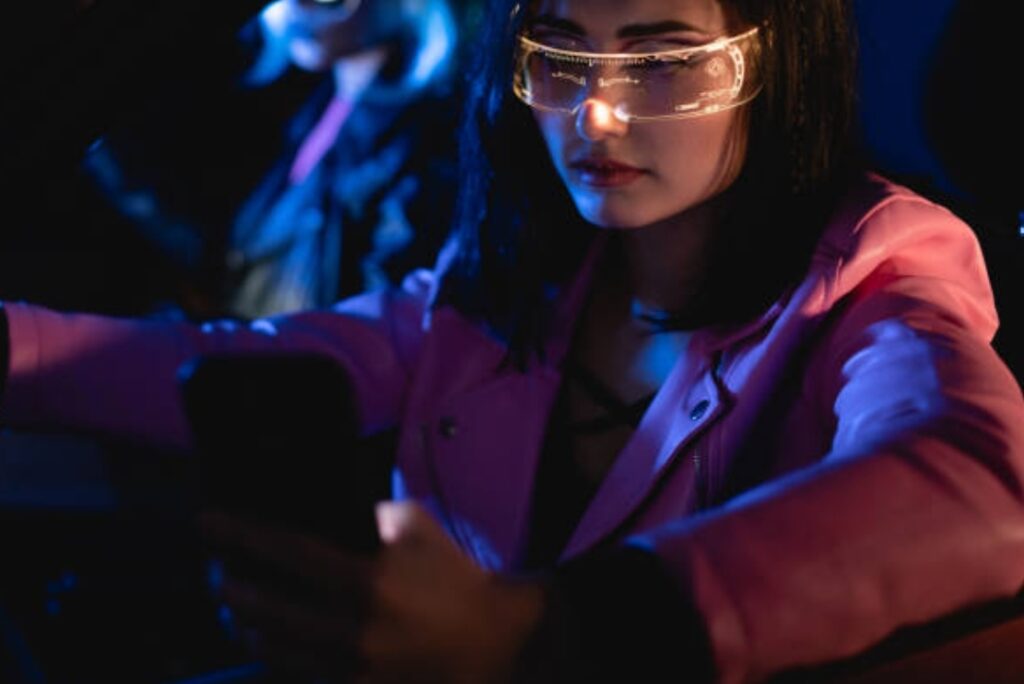
AI-Powered Wearables Take the Lead 🤖
Artificial Intelligence will be the true driving force behind the next generation of smart glasses.
- Personal AI Assistants: Imagine your glasses predicting what you need before you ask — from suggesting the fastest route home to reminding you of someone’s name during a meeting.
- Contextual Awareness: Glasses will analyze your surroundings in real-time, displaying useful information (e.g., restaurant reviews, object recognition, health tracking).
- Seamless Language Translation: Real-time AR subtitles will break language barriers, making global communication effortless.
👉 This is where smart glasses vs smartphone differs most: while phones require manual interaction, smart glasses will anticipate and respond proactively through AI.
6G and Hyper-Connectivity 🌐
By the late 2020s, 6G networks will change the game for wearable devices.
- Ultra-Low Latency: Near-instant data transmission will allow AR overlays without lag.
- Cloud Offloading: Instead of relying on onboard processing, smart glasses will tap into the cloud, reducing size and weight.
- Edge Computing: Data will be processed locally (closer to the user), making interactions smoother and more secure.
This means the best smart glasses 2025 are just the stepping stone — future models will be far more powerful, connected, and lightweight.
Integration With Smart Homes & IoT 🏡
Smart glasses won’t just replace your phone — they’ll become the control hub for your entire digital lifestyle.
- Smart Home Management: Adjust lighting, temperature, and security with a glance or gesture.
- Virtual Screens Everywhere: Replace physical monitors and TVs with AR displays floating in your home.
- IoT Ecosystem: From cars to appliances, every connected device could sync seamlessly with your glasses.
👉 Instead of reaching for a smartphone app, your glasses will give you a hands-free dashboard for your entire smart ecosystem.
Revolutionizing Work & Education 📚💼
The workplace and classroom of the future will be transformed by AR-enabled smart glasses:
- Remote Collaboration: Holographic meetings where participants appear as lifelike avatars.
- Workplace Training: Real-time AR instructions for engineers, surgeons, and factory workers.
- Immersive Learning: Students could experience history, science, and geography in interactive 3D environments.
This makes future smart glasses not just consumer gadgets, but tools with massive potential in industries worldwide.
Healthcare and Wellness Applications 🩺
The next wave of innovation will redefine healthcare accessibility:
- Real-Time Health Monitoring: Smart glasses could track eye health, detect fatigue, or monitor vital signs.
- AR Surgery Assistance: Surgeons could access patient scans during procedures without looking away.
- Telemedicine: Doctors could guide patients remotely using augmented overlays.
👉 This shift highlights how smart glasses vs smartphones isn’t just about convenience — it’s about saving lives and improving well-being.
Challenges That Must Be Overcome ⚠️
Despite the promise, smart glasses face hurdles before full adoption:
- Privacy Concerns: Constant cameras and AR scanning may spark surveillance fears.
- Battery Efficiency: Ultra-thin designs must balance comfort with long usage times.
- Affordability: Widespread adoption won’t happen until prices rival smartphones.
- Social Acceptance: Glasses must be fashionable, lightweight, and less “techy” to be embraced by the masses.
The Vision Ahead – Beyond Smartphones? 🔮
By 2035, experts believe future smart glasses could merge with other wearables (like earbuds and smartwatches) to create a fully immersive digital ecosystem.
Instead of being glued to screens, our interactions will shift to ambient computing — where technology fades into the background and information simply appears when needed.
👉 The best smart glasses 2025 are only the beginning of this shift.
👉 Smartphones will likely coexist for a while, but the future is leaning toward “screenless tech” — where sight, sound, and voice replace physical devices.
So, when we talk about smart glasses vs smartphone, the debate in 2025 is only scratching the surface.
The real future isn’t about choosing one over the other — it’s about how smart glasses will eventually transform the way we see and interact with the world.
👉 Ready to embrace the future?
👉 Explore the best smart glasses 2025 today and be among the first to step into a world beyond screens.
Conclusion – Smart Glasses vs Smartphones in 2025: The Final Verdict
The debate of smart glasses vs smartphone in 2025 isn’t about declaring a single winner. Instead, it’s about recognizing that each plays a vital role in our digital lives.
Smartphones remain the undisputed hub of communication and connectivity, while future smart glasses are emerging as the next frontier of immersive, hands-free technology.

Smartphones: Still Essential in 2025 📱
- Smartphones are more powerful and versatile than ever, offering seamless apps, 5G (and soon 6G) connectivity, and everyday practicality.
- They remain the primary device for productivity, entertainment, and social interaction.
- Affordability and widespread ecosystem support ensure smartphones won’t vanish anytime soon.
Smart Glasses: The Rising Star 👓
- The best smart glasses 2025 are breaking barriers with AR navigation, AI integration, real-time translation, and health tracking.
- They provide a hands-free experience that smartphones can’t match, delivering information directly into your field of view.
- While still facing challenges (privacy, price, and style), future smart glasses show strong potential to become mainstream by the next decade.
Coexistence – Not Replacement (Yet) 🔄
- Instead of replacing smartphones, smart glasses in 2025 will coexist and complement them.
- Think of it this way: smartphones will remain your command center, while smart glasses act as your augmented reality lens on the world.
- Together, they create a powerful ecosystem that blends portability, convenience, and futuristic innovation.
The Road Ahead 🚀
Looking beyond 2025, the real transformation will come with AI-driven wearables, 6G networks, and smarter AR applications.
As these technologies mature, smart glasses could eventually shift from a luxury accessory to a daily essential — much like smartphones did over the last 15 years.
The question isn’t if smart glasses will change our digital habits, but when.
The future is clear: smart glasses vs smartphones isn’t a battle, it’s a partnership. In 2025, the best smart glasses represent the next step in wearable innovation — a preview of the screenless, AI-powered world ahead.
👉 Whether you’re a tech enthusiast, a professional, or simply curious about future smart glasses, now is the perfect time to start exploring.
👉 Stay updated on the latest releases, compare models, and see which smart glasses in 2025 might be the right fit for you.
The future isn’t just in your pocket anymore — it’s right in front of your eyes. 👓✨
You might also like :