
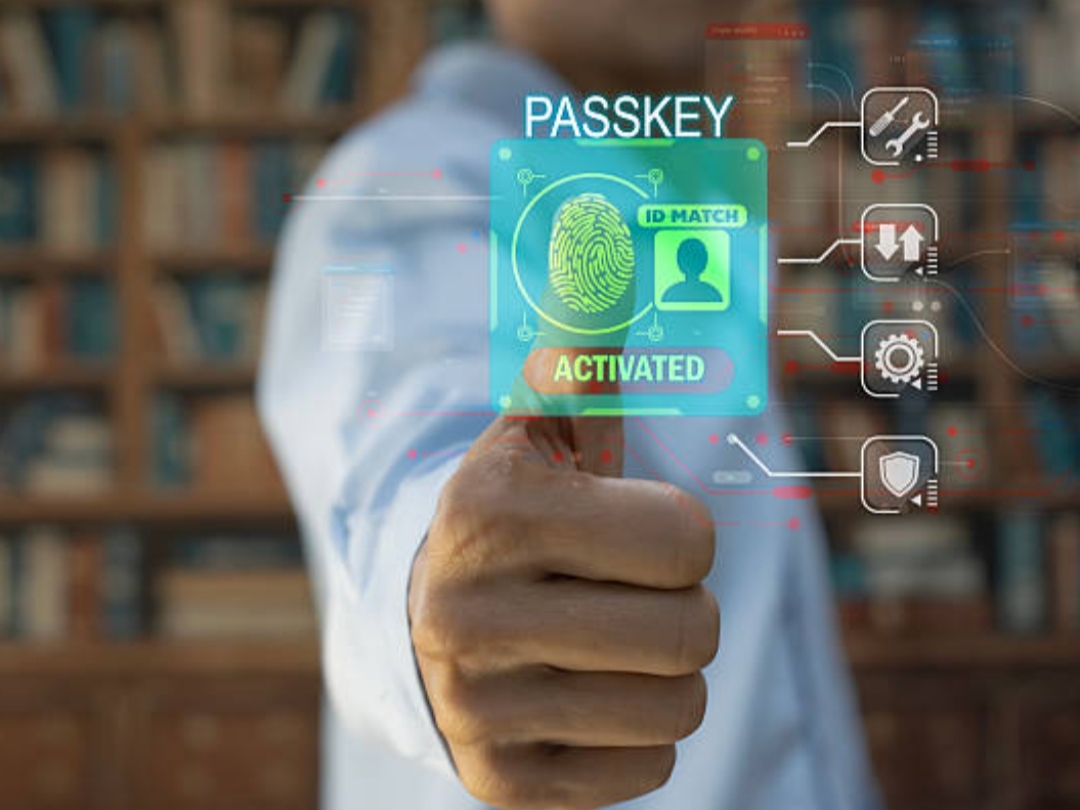
Introduction — The End of Passwords as We Know It
🔒 What are passkeys and why should you care about secure login 2025?
Passkeys are not just another login gimmick — they are a fundamental shift away from typed secrets and toward cryptographic, device-bound credentials.
Traditional passwords rely on a secret you remember and type, and that model has become dangerously brittle because people reuse passwords, choose weak phrases, and fall for phishing scams.
Passwords also become a single point of failure when servers are breached and large databases of credentials are leaked.
These weaknesses are exactly why the tech industry has been racing toward passwordless solutions in recent years.
In plain words: passkeys replace “something you know” (a password) with something you have + something you are (your device + your fingerprint or PIN), and that combination dramatically reduces the attack surface.
A passkey is basically a private cryptographic key stored on your device and unlocked by you, while the matching public key is what websites store — which by itself is useless to attackers.
➡️ Why this matters for Secure Login 2025.
2025 is the year the momentum becomes tangible: major platform vendors and password managers are moving passkeys from “optional” to default for new accounts and sign-in flows.
That means better user experience, fewer help-desk password resets, and far fewer successful phishing attacks.
⚠️ Think of passkeys as built-in phishing immunity.
Because passkeys use origin-bound public key cryptography, a malicious site pretending to be your bank cannot trick your device into releasing the private key to the attacker.
That single property makes passkeys intrinsically resistant to classic phishing and credential stuffing attacks that plague passwords.
A Quick Plain-English Example — How switching from passwords to passkeys changes a login
When you register a passkey on a site, your device creates a matched key pair automatically.
The site stores only the public key; your private key never leaves your device.
When you return to sign in, the site challenges your device; your device verifies that the site is genuine, then your device signs the challenge with the private key after you unlock it with biometrics or a PIN.
No password typed.
No reusable secret on the server.
No easy way for phishers to trick you into handing over usable credentials.
Passkeys vs Passwords — the most important differences (short preview in the intro)
Passwords are shared secrets that can be reused, stolen, or phished.
Passkeys are asymmetric cryptographic credentials where the private key is device-bound and never transmitted.
Passwords rely on memory and human habits.
Passkeys rely on devices and secure unlock methods (biometrics or PIN).
This difference is why the phrase passkeys vs passwords is not just marketing — it describes a dramatic change in how authentication works.
What to expect in the rest of this article (what you’ll learn)
You’ll get a clear, non-technical explanation of what passkeys are and how they work.
You’ll see a practical comparison of passkeys vs passwords so you can explain the change to colleagues or customers.
You’ll get step-by-step guidance on how to start using passkeys today on Android, iOS, Windows, and macOS.
You’ll learn the edge cases and limitations so you can make informed security and recovery plans.
You’ll finish with bold, practical next steps you can implement immediately to improve your secure login 2025 posture.
One more reality check — adoption and platform support
This is not theoretical.
Apple, Google, and Microsoft have publicly committed to speeding passkey adoption and to building syncing and cross-device workflows that make passkeys practical for everyday users.
Major password managers and OS vendors now support passkey storage and transfer, which addresses the earlier concern about “what if I lose my device.”
A short, practical reassurance
If you’re worried that passkeys are only for techies: they aren’t.
Passkeys are purposely designed for mainstream consumers — to be faster, safer, and simpler than passwords while requiring very little extra knowledge from users.
That’s why moving toward passkeys is a sensible, timely step for any individual or business concerned with modern security.
Key takeaways from this Introduction
Passkeys are the future of authentication because they eliminate shared secrets and are phishing-resistant.
Major tech companies are actively rolling out passkey defaults and syncing to make adoption seamless in 2025.
You don’t need to be an expert to get started — the next sections explain how to create, use, and recover passkeys on the most common platforms.
A: Ready to stop worrying about passwords?
Start using passkeys today and lock down your online life.
Try this passkey-ready password manager — or follow our step-by-step setup in the next section.
🛡️ What Are Passkeys? — The Simple Yet Powerful Future of Secure Login
🔑 In today’s digital era, passwords are no longer enough to protect our online identity.
With cyber threats becoming more sophisticated every year, we need a login solution that’s not just stronger — but smarter.
That’s where passkeys come in.
So, what are passkeys really?
Let’s break down this powerful, next-generation authentication method that’s revolutionizing how we log in securely in 2025 and beyond.
💡 Definition — What Exactly Are Passkeys?
Passkeys are a passwordless login technology designed to replace traditional passwords entirely.
Instead of typing a string of characters that can be stolen or guessed, you use a cryptographic key pair stored securely on your device.
One key (the private key) stays safely on your phone or computer, while the other (the public key) is stored by the website or app you’re logging into.
When you sign in, your device verifies your identity using biometric authentication (like Face ID, fingerprint, or PIN).
It then signs a digital challenge from the website using your private key — proving it’s really you without ever revealing the private key itself.
💬 In simple terms:
You no longer need to remember or type passwords.
Your device becomes your secure key.
👉 This is why the phrase “passkeys vs passwords” is such a big deal — passkeys don’t rely on memory or human error, they rely on mathematics and encrypted trust.
🔐 How Passkeys Work (Step-by-Step Breakdown)
Understanding how passkeys work helps you see why they’re considered the most secure login method in 2025.
Here’s a simplified breakdown:
1️⃣ Account Setup (Registration)
When you sign up on a website that supports passkeys, your device automatically generates two keys:
- Private key → stays securely inside your phone, tablet, or computer.
- Public key → sent to the website’s server.
2️⃣ Login Process
When you revisit the site, it sends a random challenge (like a puzzle) to your device.
Your device solves this challenge using your private key — but it never exposes that key to the internet.
It just sends back the verified response.
3️⃣ Verification
The website uses your public key to verify the response.
If it matches, you’re instantly logged in.
✅ Result: You’ve logged in securely — no password, no typing, and no risk of phishing.
💡 Pro Tip:
You can use your fingerprint, Face ID, or device PIN to confirm the login.
That means you don’t have to remember anything or worry about your password getting leaked.
🌍 Why Tech Giants Are Moving Toward Passkeys
Big names like Apple, Google, Microsoft, and PayPal are already integrating passkeys into their platforms.
They’ve joined forces under the FIDO Alliance, a global organization working to eliminate weak passwords.
These companies have confirmed that 2025 will be a turning point — where passkeys become the new standard for secure login 2025 experiences across devices and browsers.
Did You Know?
Passkeys can now be synced across your devices using iCloud Keychain, Google Password Manager, or Microsoft Authenticator.
So even if you lose one device, your logins are safe and recoverable.
This marks a major milestone in digital security — one that moves us toward a passwordless, frictionless future.
⚙️ Benefits of Using Passkeys (Why Everyone Should Switch Now)
Here are some undeniable reasons why you should start using passkeys today:
✅ 1. Zero Phishing Risk
Hackers can’t trick you into entering a passkey on a fake site because your device verifies the website automatically.
✅ 2. No Password Leaks
Your private key never leaves your device, so even if a company’s database is hacked, your credentials remain safe.
✅ 3. Faster Login
Say goodbye to typing long, complicated passwords — just tap your fingerprint or look at your camera.
✅ 4. Cross-Device Compatibility
With cloud syncing, you can use your passkeys across all your devices.
✅ 5. Built-In Simplicity
No password resets, no “Forgot Password?” headaches, and no frustration.
Don’t wait for a data breach to make you change.
Switch to passkeys now and enjoy a faster, smarter, and more secure way to log in.
Set up your first passkey today
🧭 Common Misconceptions About Passkeys
Even though passkeys sound futuristic, many people misunderstand how they work. Let’s clear that up:
❌ Myth 1: “If I lose my device, I’ll lose access to my accounts.”
✅ Truth: Passkeys are backed up and synced through your cloud account (e.g., iCloud, Google, Microsoft), so you can restore them on a new device.
❌ Myth 2: “Passkeys aren’t supported by most sites yet.”
✅ Truth: Major platforms like Google, YouTube, GitHub, PayPal, eBay, and even WhatsApp are already rolling them out globally.
❌ Myth 3: “Passkeys are complicated.”
✅ Truth: They’re actually simpler than passwords — one tap and you’re in.
🧩 How Passkeys Make Logins Safer Than Ever
Let’s be real — passwords are outdated.
Data leaks, phishing scams, and keyloggers make them a ticking time bomb.
But passkeys neutralize these threats because they never transmit sensitive information.
Here’s how passkeys strengthen your secure login 2025 process:
- 🔒 End-to-End Encryption: No one, not even the website, ever sees your private key.
- 🧱 Local Authentication: Only you can unlock your passkey with biometrics.
- 🌐 Origin Binding: Passkeys only work on the correct website domain, blocking fake login pages.
- 🔁 Auto Sync & Backup: Even if your phone breaks, your logins remain accessible through cloud sync.
Bottom Line:
Passkeys are the future — the smarter, safer, and simpler way to protect your digital identity.
🧠 Expert Insight — Why You Should Care About Passkeys Now
Cybersecurity experts and IT professionals are calling passkeys the biggest security upgrade in decades.
Here’s why this shift is happening so fast:
- 85% of breaches still start with a stolen or weak password.
- The average person has over 100 accounts but reuses the same password for most.
- Phishing attacks increased by 300% in the last 3 years.
Passkeys eliminate these vulnerabilities completely.
They offer what security researchers call “phishing-resistant authentication”, meaning there’s no way for hackers to steal what isn’t there.
⚡ Passwords Are Dying, and Passkeys Are the Future
The password era is ending — fast.
If you’re still using passwords, you’re one breach away from trouble.
Passkeys represent freedom from password fatigue.
They bring convenience, simplicity, and airtight security — all in one tap.
So, whether you’re managing your own accounts or securing your business systems, the smart move is clear:
➡️ Start migrating to passkeys today.
Learn how to enable passkeys on your favorite apps
🧾 Key Takeaways
- Passkeys are replacing passwords as the next big evolution in secure login 2025.
- They use cryptographic keys and biometrics, not guessable text.
- They’re faster, safer, and easier than any password you’ve ever created.
- Supported by Google, Apple, Microsoft, and PayPal, passkeys are becoming the global standard.
🔐 It’s time to say goodbye to passwords forever.
Embrace passkeys — your smarter, faster, and truly secure way to log in.
Click here to set up your passkey account now
⚙️ How Passkeys Work Behind the Scenes — The Science of Truly Secure Login 2025
🔒 Have you ever wondered how passkeys actually work?
They seem almost magical — no password to remember, no typing, and yet they offer stronger security than any traditional login method.
But behind that simplicity lies advanced cryptography and zero-trust security design.
In this section, we’ll dive deep into the mechanics of passkeys, how they authenticate you without revealing your secrets, and why this technology is leading the charge for a more secure login 2025 experience across every device.
🧠 The Foundation — Public and Private Key Cryptography
At the heart of every passkey lies a concept known as public-key cryptography.
It’s the same powerful encryption technology used in banking, military systems, and blockchain networks — now simplified for everyday users.
Here’s how it works 👇
- When you create a passkey, your device generates a pair of keys:
- 🔑 Private Key: Stored securely inside your phone or computer. It never leaves your device.
- 🌐 Public Key: Sent to the website or app you’re signing up for.
- 🔑 Private Key: Stored securely inside your phone or computer. It never leaves your device.
- During login, instead of sending your password, your device proves your identity by signing a digital challenge using your private key.
- The website verifies this signature with your public key.
- If everything matches, you’re authenticated instantly.
- The website verifies this signature with your public key.
💡 In simple terms:
The system confirms you are who you say you are — without ever revealing your private information.
That’s why even if hackers breach a company’s database, they can’t steal your credentials — because your private key never touches the internet.
🔐 Step-by-Step — How Passkey Authentication Works
To understand the passkeys vs passwords debate clearly, let’s walk through what happens every time you log in with a passkey.
Step 1️⃣: Registration (Creating a Passkey)
When you first register on a passkey-enabled site:
- Your device (e.g., iPhone, Android, or Windows PC) creates a unique key pair.
- The private key stays in a secure hardware chip on your device.
- The public key is sent to the site’s server and stored safely.
This process happens automatically — you don’t see or type anything.
Step 2️⃣: Authentication (Logging In)
When you return to the site later:
- The website sends your device a random digital “challenge.”
- Your device checks whether this request is legitimate — it verifies the domain origin (so phishing sites can’t fake it).
- Once confirmed, your device signs the challenge using your private key.
- The signed challenge is sent back, and the website verifies it using your public key.
- If the signature matches, you’re logged in instantly.
No password.
No typing.
No phishing risk.
Step 3️⃣: Local User Verification
Your device requires biometric verification (like Face ID, fingerprint, or PIN) before using your private key.
This ensures that even if someone steals your device, they can’t log in without your physical presence.
💬 In other words: Your face or fingerprint unlocks your passkey, which then authenticates you securely.
🧩 Why Passkeys Are Virtually Phishing-Proof
One of the biggest selling points of passkeys is their built-in phishing resistance.
Here’s why they’re practically unhackable 👇
- 🎯 Origin Binding: Passkeys are tied to the exact website domain.
If a hacker creates a fake “Faceb00k” or “Gooogle” site, your device will refuse to sign in because the domain doesn’t match the original one. - 🚫 No Shared Secrets: Traditional passwords can be stolen or reused. Passkeys don’t rely on shared secrets — they use cryptographic signatures unique to every session.
- 🔄 One-Time Challenge: Each login uses a new, random challenge that can’t be reused. Even if intercepted, it’s useless.
✅ Result:
You’re protected against phishing, keylogging, credential stuffing, and brute-force attacks — all at once.
🌐 The Role of the FIDO Alliance and Tech Giants
The FIDO Alliance (Fast Identity Online) — a coalition including Apple, Google, Microsoft, and Intel — developed the standards that make passkeys universal.
These standards are built around WebAuthn and P (Client to Authenticator Protocol), ensuring cross-platform compatibility and airtight security.
In 2025, nearly every major browser and operating system — including Chrome, Safari, Edge, Android, and iOS — supports passkeys.
This makes them not just a trend, but the new default standard for secure login 2025.
📱 How Passkeys Work Across Devices (Sync & Backup)
A common question people ask is:
“If my passkey is stored on my phone, what happens if I lose it?”
Here’s the good news 👇
Modern ecosystems now sync passkeys securely across your devices:
- Apple: Uses iCloud Keychain encryption to sync passkeys across iPhone, iPad, and Mac.
- Google: Syncs through your Google Account using end-to-end encryption.
- Microsoft: Integrates with Windows Hello and Authenticator to keep passkeys safe in the cloud.
That means even if you buy a new phone or laptop, your passkeys are safely restored when you log in to your cloud account.
💡 Pro Tip: Always enable two-factor recovery options or trusted device verification to ensure you can recover access easily.
⚙️ Comparison — Passkeys vs Passwords (Technical Deep Dive)
Let’s see how they stack up side by side 👇
| Feature | Passwords | Passkeys |
| Type of Credential | Text-based secret | Cryptographic key pair |
| Storage | Server database | Local secure device storage |
| Risk of Phishing | Very High | Near Zero |
| Memory Requirement | You must remember it | Your device remembers for you |
| Cross-Device Support | Manual input or sync | Automatic sync via cloud |
| Authentication Speed | Slow (typing, CAPTCHA) | Instant (biometric tap) |
| Security Standard | Outdated | Modern (FIDO2 + WebAuthn) |
✅ Verdict: Passkeys completely eliminate the weaknesses of passwords while improving convenience and user experience.
💡 The Real-World Benefits for Secure Login 2025
Why are experts calling passkeys the future of authentication?
Because they provide a triple-layer advantage:
1️⃣ Faster: One tap or glance replaces typing and verifying passwords.
2️⃣ Safer: No chance of phishing, data leaks, or password reuse.
3️⃣ Simpler: Works across devices and platforms seamlessly.
This balance of speed, safety, and simplicity is why secure login 2025 systems are now built around passkeys — not passwords.
⚠️ Limitations You Should Know (and How to Overcome Them)
While passkeys are incredibly powerful, there are still a few challenges worth noting:
- 🌍 Limited Adoption: Some older websites and systems haven’t yet added passkey support.
👉 Tip: Use hybrid login systems (password + passkey) during transition. - 💻 Device Dependence: You need your device nearby to sign in.
👉 Tip: Enable multi-device sync or QR-code authentication for easy access. - Account Recovery: Losing access to your main cloud account may require verification.
👉 Tip: Always add backup recovery methods like hardware keys or recovery codes.
Despite these small hurdles, the benefits far outweigh the drawbacks — especially as the world moves toward a passwordless 2025.
Why Understanding How Passkeys Work Matters
Understanding how passkeys function isn’t just for tech experts — it’s for anyone who values online safety.
This new system is designed to give you total control over your digital identity, without depending on vulnerable passwords.
🚀 The bottom line:
- Passkeys use mathematics, not memory.
- They protect you against phishing, leaks, and theft.
- And they represent the biggest leap forward in secure login 2025 technology.
Make the smart move today!
Enable passkeys on your favorite apps and experience truly secure, password-free login.
Set up your passkeys now and future-proof your accounts
Passkeys vs Passwords: Why Traditional Login Methods Are Dying
The debate between passkeys vs passwords marks one of the biggest turning points in the history of online security.
For decades, passwords have been the foundation of how we access everything — from emails and banking apps to social media and cloud storage.
But as cyber threats grow more advanced, it’s becoming clear that the traditional password system is no longer safe, convenient, or future-ready.
In contrast, passkeys represent a revolutionary leap toward secure login 2025 — a world where logins are instant, identity theft is eliminated, and users enjoy seamless digital experiences.
Let’s explore why passwords are dying, and why passkeys are quickly taking over.
🔒 The Password Problem — Why the Old System Is Broken
Passwords were created back in the 1960s — long before cybercrime, phishing, and social engineering became billion-dollar problems.
In today’s hyperconnected world, relying on simple text-based logins is like locking a modern mansion with a 1960s padlock.
Here’s why the old password model is failing:
- Too many passwords to remember: The average user has over 100+ online accounts, making it nearly impossible to manage unique passwords for each.
- Weak passwords: People still use easily guessed passwords like “123456” or “password123.”
- Reused credentials: Hackers exploit reused passwords through credential stuffing attacks, gaining access to multiple accounts.
- Phishing and leaks: Once a password is stolen or leaked, it can be used anywhere — leading to identity theft and financial loss.
Even with the introduction of two-factor authentication (2FA), users are still tricked into revealing codes or clicking malicious links.
In short — passwords were never designed for the complexity of today’s digital threats.
The Rise of Passkeys — Simplicity Meets Security
Enter passkeys, the smarter, faster, and far more secure alternative to passwords.
Built on public-key cryptography, passkeys eliminate the need for users to remember or type anything.
Instead, your device holds a private key, while the service you log into stores a public key.
When you authenticate, your device confirms your identity using biometrics like Face ID, Touch ID, or a device PIN.
The private key signs a digital challenge that only your device can complete — and voilà, you’re in.
No passwords.
No phishing.
No stress.
Here’s why passkeys are winning the battle in passkeys vs passwords:
✅ Unhackable: Your private key never leaves your device, so hackers can’t steal it from servers.
✅ Phishing-proof: Even if a hacker builds a fake website, your passkey won’t work on it because it’s domain-specific.
✅ Faster login: Biometric authentication takes seconds — far quicker than typing complex passwords.
✅ Cross-platform support: You can use the same passkeys across iOS, Android, Windows, and macOS.
This combination of security + convenience is what makes passkeys the cornerstone of secure login 2025 and beyond.
Technical Breakdown — Why Passkeys Are Safer
To understand why passkeys outperform passwords, let’s look under the hood.
| Feature | Passwords | Passkeys |
| Authentication Method | Text input | Cryptographic proof |
| Data Stored On | Server (vulnerable to breach) | Local device (encrypted) |
| Phishing Risk | High | None |
| Cross-Device Access | Manual login required | Seamless via cloud sync |
| Setup Process | Create password manually | Automatic upon registration |
| User Effort | High | Minimal |
As you can see, passkeys don’t rely on human memory or input.
They rely on mathematical verification, meaning the system verifies who you are — not what you know.
This eliminates human error, making identity theft nearly impossible.
Even if a hacker somehow breaches a company’s servers, they’d only find useless public keys — not the private keys that unlock your accounts.
Real-World Adoption — Big Tech Leads the Way
Leading companies have already recognized that passwords are a dying breed.
Apple, Google, Microsoft, and PayPal have fully integrated passkey login into their ecosystems.
- Apple uses passkeys in iCloud Keychain — letting users sign in with Face ID or Touch ID instantly.
- Google has made passkeys the default login method for personal accounts since 2024.
- Microsoft is incorporating passkeys into Windows Hello for both personal and business accounts.
- PayPal, eBay, and Shopify now allow users to log in using passkeys instead of traditional credentials.
This shift marks a massive industry-wide movement toward passwordless authentication, and it’s growing fast.
By the end of 2025, experts predict that passkeys will replace passwords across most major platforms.
Why You Should Switch to Passkeys Now
If you’re still relying on passwords, you’re using outdated tech that leaves your accounts at risk.
Now is the perfect time to make the switch to passkeys and future-proof your online security.
Here’s what you gain:
🔹 Peace of mind — knowing your data can’t be phished or leaked.
🔹 Lightning-fast logins with just a fingerprint or glance.
🔹 Cross-device convenience without password resets.
🔹 Compliance with future security standards like FIDO2 and WebAuthn.
👉 Ready to experience true secure login 2025? Try this trusted passkey-enabled manager and protect your digital identity now!
The Password Era Is Ending
Passwords had a good run, but their time is up.
In the era of AI-driven hacking, deepfakes, and automated phishing, relying on text-based credentials is a disaster waiting to happen.
Passkeys, on the other hand, offer the best of both worlds — maximum security and effortless usability.
They’re not just an upgrade; they’re a complete reinvention of how we prove our identity online.
So, when it comes to passkeys vs passwords, there’s no contest.
The future belongs to passkeys, and the sooner you adopt them, the safer your online world will be.
💡 Take action now — make the switch to passkeys and step confidently into the era of secure login 2025.
How to Start Using Passkeys Today 🚀
Ready to embrace the future of online security?
Then it’s time to learn how to start using passkeys today — and make your digital life simpler, faster, and far more secure.
If you’ve already heard about the debate between passkeys vs passwords, you probably know that passkeys offer unmatched protection and convenience.
But how do you actually set them up and start using them across your favorite websites, apps, and devices?
Let’s walk through everything you need to know — step by step — so you can move toward a truly secure login 2025 experience starting today.
🔧 Step 1 — Check If Your Devices Support Passkeys
Before diving in, it’s important to know that passkeys rely on modern authentication technology.
Most current smartphones, tablets, and computers already support them, especially if you’re using updated operating systems.
✅ iPhone / iPad: Supported from iOS 16 and later via iCloud Keychain.
✅ Mac: Supported from macOS Ventura and later.
✅ Android Devices: Supported from Android 9 (Pie) onward with Google Password Manager.
✅ Windows: Supported through Windows Hello and compatible browsers like Chrome and Edge.
If your device is from the last few years, you’re already ready.
Just ensure that your system and browsers are updated to the latest versions.
💡 Tip: You don’t need to install complicated software.
Everything you need is already built into your system’s password manager or security settings.
🔑 Step 2 — Enable Passkeys in Your Account Settings
Now that your device is ready, it’s time to activate passkeys for your online accounts.
Many platforms are already supporting passwordless authentication, including:
- Google Accounts
- Apple ID
- Microsoft Accounts
- PayPal, eBay, Shopify, TikTok, and more
Here’s how to set it up:
- Go to your account’s Security Settings.
- Look for an option like “Use a Passkey,” “Set Up Passwordless Login,” or “Enable FIDO2/WebAuthn.”
- Choose your authentication method — usually your biometric (fingerprint or face) or device PIN.
- Confirm to generate your new passkey.
- Done! You’ve officially joined the future of secure login 2025.
Once set up, you’ll log in automatically by verifying your identity through your device — no password needed.
🌐 Step 3 — Sync Your Passkeys Across Devices
One of the biggest advantages of passkeys is that they can sync securely across your devices.
You won’t have to worry about losing access or manually entering credentials ever again.
Each major platform offers a built-in synchronization method:
- Apple Users: Passkeys are stored and synced automatically in iCloud Keychain with end-to-end encryption.
- Google Users: Passkeys are managed via Google Password Manager and available across Android and Chrome.
- Microsoft Users: Passkeys are managed with Windows Hello and synced via your Microsoft account.
This means if you create a passkey on your phone, it will also be available on your laptop or tablet — securely and automatically.
🔐 Important: Even though your passkeys are synced, your private key never leaves your device unencrypted.
This ensures your credentials stay completely secure.
💻 Step 4 — Use Passkeys for Everyday Logins
Now comes the best part — using your passkeys for everyday logins.
Whether you’re signing into your favorite shopping sites, social media apps, or cloud accounts, passkeys make access instant.
Here’s how the process looks in real life:
- Visit a website or open an app that supports passkey login.
- Click “Sign in with a Passkey.”
- Your device will prompt you for biometric verification.
- Tap your fingerprint, glance at your face, or enter your PIN.
- You’re in — instantly and securely.
No password typing.
No password reset emails.
No worrying about remembering credentials ever again.
👉 Try this recommended passkey-ready password manager today and experience how effortless login security can be.
⚙️ Step 5 — Transition Gradually from Passwords to Passkeys
You don’t need to delete all your passwords right away.
A gradual transition works best — especially if some sites don’t yet support passkeys.
Here’s a smart way to do it:
- Step 1: Start with your most important accounts — email, banking, and social media.
- Step 2: Enable passkeys for platforms that already support them.
- Step 3: Continue using strong passwords (with 2FA) for accounts that don’t yet offer passkeys.
- Step 4: Gradually migrate the rest as more platforms adopt passwordless login.
By 2025, almost all major services will offer passkey authentication — so making the switch now puts you ahead of the curve.
⚡ Pro Tip: Always back up your devices and ensure passkey syncing is enabled before upgrading or switching phones.
Troubleshooting and Common Questions
Even though passkeys are easy to use, here are a few quick answers to common concerns:
Q1: What if I lose my phone or device?
A: Don’t worry — your passkeys are backed up through your cloud account (Google, Apple, or Microsoft).
You can restore them when you log in on a new device.
Q2: Can hackers steal my passkeys?
A: No. Your private key is stored securely on your device and never transmitted online.
Even if a hacker breaches a company’s database, they can’t access your keys.
Q3: Do I still need a password manager?
A: Not necessarily, but using a passkey-enabled manager can make it easier to organize and sync your credentials across multiple platforms.
Q4: Are passkeys free to use?
A: Yes — all major systems (Google, Apple, Microsoft) support passkeys at no extra cost.
💡 Why You Should Start Using Passkeys Right Now
Still on the fence?
Here’s the truth — passwords are becoming obsolete, and every year, millions of accounts get hacked due to weak or stolen passwords.
By adopting passkeys now, you’re future-proofing your digital identity.
✅ Instant logins — no typing, no remembering.
✅ Phishing-proof protection — your credentials can’t be stolen.
✅ Cross-platform access — works across all your devices.
✅ Completely free and easy to use.
👉 Don’t wait until your accounts are compromised. Protect yourself today with this top-rated passkey login tool.
It’s quick, secure, and designed for modern secure login 2025 standards.
🌍 Step Into a Passwordless Future
The transition to passkeys isn’t just another tech update — it’s a revolution in digital security.
By learning how to start using passkeys today, you’re taking a bold step toward a safer, smarter, and simpler online experience.
Your fingerprints, your face, and your devices are now your ultimate keys.
No one can guess them, steal them, or hack them.
💪 Embrace the passwordless future — switch to passkeys today and experience the power of secure login 2025!
The Benefits of Passkeys for Individuals and Businesses 🌍
The rise of passkeys isn’t just another tech trend — it’s a full-scale transformation of how we secure our digital world.
From personal accounts to enterprise-level systems, the benefits of passkeys go far beyond convenience.
They represent a new era of trust, safety, and simplicity — one that redefines secure login 2025 for individuals and businesses alike.
Let’s explore how adopting passkeys can change the way you work, live, and protect what matters most.
👤 Benefits of Passkeys for Individuals
💡 1. Password-Free Convenience
Imagine never having to type or reset a password again.
That’s the everyday reality with passkeys.
Instead of remembering dozens of complex combinations, you simply use your biometric login — like your fingerprint, facial recognition, or device PIN — to access your accounts in seconds.
This means:
- No more password fatigue.
- No more “Forgot password?” frustrations.
- No more insecure notes or spreadsheets storing your logins.
Everything happens instantly and securely, giving you a seamless digital experience.
👉 Ready to simplify your life? Try this passwordless login app and experience true convenience.
🔐 2. Superior Security with Biometric Verification
When comparing passkeys vs passwords, the most powerful difference is security.
Passkeys are built on FIDO2 cryptographic technology, which replaces weak text-based passwords with advanced encryption.
Unlike traditional logins that can be stolen, guessed, or phished, passkeys rely on device-bound private keys and biometric verification.
Here’s what this means for you:
✅ Zero phishing risk: Passkeys are domain-specific and cannot be reused on fake websites.
✅ No data leaks: Even if a service is hacked, your passkey remains safe on your device.
✅ Unhackable design: Your private key never leaves your phone, laptop, or tablet.
This combination of cryptographic and biometric authentication makes passkeys the most secure login method for 2025 and beyond.
3. Cross-Platform Accessibility
One of the biggest frustrations of passwords is managing them across different devices.
With passkeys, that problem disappears entirely.
Your passkeys are securely synced using end-to-end encryption through trusted services like:
- iCloud Keychain (Apple users)
- Google Password Manager (Android & Chrome users)
- Microsoft Hello (Windows users)
This means your logins work anywhere — from your phone to your laptop — without compromising safety.
It’s seamless, portable, and 100% secure.
⚡ 4. Faster Logins and Less Friction
Every second counts in our digital lives.
With passkeys, you can log in almost instantly — with just a glance or a touch.
Instead of typing long passwords or waiting for verification codes, your identity is confirmed through biometric authentication in milliseconds.
This makes your entire experience smoother, whether you’re:
- Checking your email
- Shopping online
- Logging into your banking app
- Accessing your work accounts
👉 Save time and secure your future with this passkey-compatible manager.
🧘 5. Peace of Mind and Reduced Cyber Anxiety
Let’s face it — managing passwords is stressful.
We worry about hacks, breaches, and identity theft every single day.
Passkeys eliminate that anxiety completely.
Because your credentials can’t be stolen or guessed, you can browse, shop, and work online with total confidence.
You finally get the peace of mind you deserve in today’s digital age.
💪 Adopt passkeys now and enjoy effortless, worry-free security.
🏢 Benefits of Passkeys for Businesses
It’s not just individuals who benefit from passkeys — companies, too, are seeing a massive advantage in switching to passwordless authentication.
From cybersecurity savings to user satisfaction, businesses across every industry are upgrading to passkeys as the standard for secure login 2025.
💼 1. Stronger Protection Against Cyberattacks
Businesses spend millions each year mitigating password-related breaches.
The weakest link in any organization is often human error — reused passwords, phishing scams, or compromised credentials.
By adopting passkeys, companies can virtually eliminate these vulnerabilities.
Passkeys remove the need for passwords altogether, which means:
- No stolen credentials to sell on the dark web.
- No phishing-based access.
- No password reset scams targeting employees.
In short, passkeys close one of the biggest doors hackers use to break in.
⚙️ 2. Lower IT and Maintenance Costs
Managing passwords is expensive and time-consuming.
IT teams waste hours resetting accounts, managing password policies, and dealing with user lockouts.
With passkeys, all of that disappears.
There are no passwords to store, reset, or recover — which drastically reduces support costs.
Businesses can save thousands of hours annually by switching to passkey authentication, allowing IT teams to focus on innovation instead of troubleshooting.
💡 Smart companies are already investing in enterprise passkey solutions to modernize their security infrastructure.
💬 3. Enhanced Employee Productivity
Fewer login issues mean more time for real work.
Employees can authenticate across systems faster and with less frustration.
Whether they’re accessing corporate dashboards, internal tools, or cloud apps, passkeys ensure frictionless access without compromising security.
This leads to happier teams and increased efficiency across departments.
🌍 4. Compliance with Modern Security Standards
Regulatory compliance is a growing concern for businesses worldwide.
Passkeys align with modern standards like FIDO2, WebAuthn, and Zero Trust Architecture, ensuring your business meets global cybersecurity requirements.
Using passkeys helps organizations comply with frameworks like:
- GDPR
- ISO/IEC 27001
- NIST 800-63B
This future-proofs your company’s authentication model for upcoming privacy laws and tech regulations.
📈 5. Improved Customer Trust and Brand Reputation
Consumers today care deeply about how brands handle their data.
Offering passkey login signals that your company values privacy, safety, and user experience.
When customers see that your platform supports passwordless, biometric login, it builds immediate trust.
And trust translates into higher customer retention and stronger brand loyalty.
👉 Stand out from your competitors by implementing this trusted passkey integration platform today.
💎 The Bigger Picture — Why Passkeys Are a Win-Win for Everyone
The move to passkeys benefits the entire digital ecosystem.
For users, it means ease, speed, and peace of mind.
For businesses, it means security, savings, and stronger customer relationships.
It’s a rare example of technology that’s both safer and simpler.
As cyber threats evolve, passkeys offer a smarter, scalable solution — one that empowers both individuals and organizations to thrive in the era of secure login 2025.
🌟 Adopt Passkeys and Secure Your Digital Future
The verdict is clear: passkeys are not just an upgrade — they’re the future.
They solve the problems of passwords, protect users from modern threats, and simplify authentication across the globe.
Whether you’re an everyday internet user or a global business, adopting passkeys is one of the smartest decisions you can make today.
💪 Take control of your digital security now. Start using this passkey-compatible platform and embrace the next generation of passwordless authentication.
Are Passkeys Completely Secure? 🔒
As the world races toward passwordless authentication, one big question remains on everyone’s mind: Are passkeys completely secure?
It’s a fair concern.
After all, passwords have been the digital backbone of online security for decades — even if they’re often the weakest link.
Passkeys, however, are built on a revolutionary cryptographic foundation that makes them far more secure than traditional passwords, especially as we move into the era of secure login 2025 and beyond.
Let’s break down why passkeys are so secure — and what you should still be cautious about.
Why Passkeys Are Safer Than Passwords (Passkeys vs Passwords 🔐)
When comparing passkeys vs passwords, the biggest difference lies in how they store and verify your identity.
- Passwords rely on something you know — like a word or phrase.
That makes them easy to steal through phishing, data breaches, or brute-force attacks. - Passkeys, on the other hand, use something you own (like your device) and something you are (like your fingerprint or face scan).
They are based on public-key cryptography, meaning your secret login credential never leaves your device.
Here’s how it works:
- When you create a passkey, your device generates two keys — a public key (stored by the service) and a private key (kept securely on your device).
- When you log in, the website sends a challenge that only your private key can answer.
- The result is verified without ever transmitting the private key itself.
That means:
- No one — not even the website — ever sees or stores your secret key.
- Even if the website is hacked, your passkey remains safe.
- Phishing attacks become nearly impossible since you don’t type or share any login information.
✅ In short: Passkeys make credential theft virtually obsolete.
The Role of Biometrics in Passkey Security
Most modern passkey systems integrate biometric verification — like Face ID, Touch ID, or Windows Hello.
This adds an extra layer of protection because even if someone physically accesses your device, they can’t unlock your passkey without your biometric input.
However, biometric data itself is never shared online.
It stays securely encrypted within your device’s trusted platform module (TPM) or secure enclave.
That’s why passkeys are widely regarded as one of the safest secure login 2025 solutions.
Are There Any Risks or Limitations? ⚠️
No technology is 100% invulnerable — and passkeys are no exception.
While they drastically reduce risk, there are still a few scenarios worth being aware of:
- Device loss or theft:
If your phone or computer with passkeys is lost, you could temporarily lose access.
The good news? You can easily recover your account using cloud backup or another trusted device linked to your account. - Synchronization dependency:
Passkeys often rely on Apple iCloud Keychain, Google Password Manager, or Microsoft Authenticator to sync across devices.
If cloud syncing fails or is disabled, access might become limited. - Compatibility challenges:
Some older websites or apps still don’t support passkeys.
Until full adoption happens, you may need to use traditional passwords on certain platforms.
Still, compared to the constant threat of data breaches and phishing, these are minor issues — not security flaws.
Expert Opinions and Real-World Testing 🧠
According to FIDO Alliance and Google’s Security Research team, passkeys outperform passwords in nearly every aspect of safety, usability, and phishing resistance.
Security experts confirm that even advanced man-in-the-middle attacks fail against passkey systems due to their end-to-end cryptographic authentication.
Real-world data from Apple, Google, and Microsoft show a dramatic drop in phishing attempts and compromised accounts since implementing passkey support.
This makes passkeys the leading solution for secure login 2025 and beyond.
The Future of Passwordless Security 🌍
With more companies — from PayPal to Amazon — adopting passkeys, we’re witnessing a major shift in how digital security works.
Soon, you’ll log in to all your favorite apps, banking portals, and online stores without remembering a single password.
Instead, your identity will live securely in your trusted devices, protected by encrypted cryptographic keys.
This isn’t just more secure — it’s simpler, faster, and future-proof.
Should You Trust Passkeys Completely? 💭
While no security system is absolutely perfect, passkeys are as close as technology has ever come.
They eliminate the biggest weaknesses of passwords while adding modern, biometric-based, device-bound security that’s nearly impossible to crack remotely.
So, are passkeys completely secure?
Almost — and certainly far more than passwords will ever be.
If you want a safer, smoother, and smarter login experience, it’s time to start transitioning now.
👉 Try a passkey-compatible password manager today
and protect your digital world with next-generation secure login 2025 technology.
The Future of Passwordless Authentication — Why Passkeys Are Here to Stay 🚀
We’ve reached a turning point in the digital world.
The traditional password — once our main line of defense — is slowly becoming obsolete.
In its place rises a smarter, more secure, and user-friendly alternative: passkeys.
But why are tech giants, cybersecurity experts, and major industries moving toward this passwordless authentication model?
And what makes passkeys the foundation of secure login 2025 and beyond?
Let’s dive deep into why this shift is happening, how it benefits both users and organizations, and what the future holds for digital identity protection.
The End of Password Fatigue and Breach Anxiety 😩
Let’s be honest — managing passwords has become a nightmare.
The average user now juggles over 100 passwords across websites, apps, and devices.
This has led to:
- Weak passwords reused across multiple sites
- Forgotten credentials and endless reset loops
- Security breaches from leaked or stolen data
According to a 2024 Cybersecurity Ventures report, over 80% of data breaches still involve weak or stolen passwords.
This is exactly the problem passkeys were designed to solve.
With passkeys, there’s nothing to remember, nothing to type, and nothing for hackers to steal.
Your credentials are encrypted and stored locally on your device — not in vulnerable databases.
That means password fatigue is over, and security anxiety fades away.
Why Big Tech Is Fully Embracing Passkeys (Apple, Google, Microsoft) 💼
When you see Apple, Google, and Microsoft all supporting the same technology, you know it’s the real deal.
In 2023, these tech giants jointly launched an initiative under the FIDO Alliance and World Wide Web Consortium (W3C) to make passkeys universal across all major platforms.
Today, passkeys are integrated into:
- Apple iCloud Keychain (iOS, macOS)
- Google Password Manager (Android, Chrome)
- Microsoft Authenticator (Windows 11 and Edge)
This cross-platform support means you can securely log in on any device — whether it’s an iPhone, Android, or Windows PC — using your fingerprint, face scan, or device PIN.
No more worrying about memorizing or syncing complicated passwords.
Your passkeys sync seamlessly and securely through encrypted cloud services.
The Rise of Secure Login 2025 — Beyond Traditional Authentication 🔑
As we enter 2025, cybersecurity is shifting from reactive defense to proactive prevention.
Secure login 2025 is about building trust through invisible, seamless protection — and passkeys are at the heart of that vision.
Here’s what’s changing:
- Zero-knowledge logins:
Services will no longer need to store your secret credentials. - Phishing-resistant authentication:
Since passkeys can’t be typed or shared, fake websites can’t trick you into revealing them. - Universal device integration:
Smart devices, cars, and even IoT systems are adopting passkey-based login for instant, safe access.
This is more than convenience — it’s a revolution in user trust.
By eliminating the weakest point (passwords), companies can focus on protecting what truly matters: your identity.
How Businesses Benefit from Going Passwordless 💼
For businesses, the shift toward passkeys isn’t just about security — it’s also about cost and user experience.
According to research from Forrester, companies spend millions each year resetting passwords and managing compromised accounts.
Switching to passkeys helps:
✅ Reduce IT support costs (fewer password resets)
✅ Lower breach risk from phishing or credential stuffing
✅ Improve user onboarding with faster, simpler sign-ins
✅ Boost trust and brand reputation for modern users
Companies that adopt passkeys early are positioning themselves as security-first leaders in their industries — an essential selling point in 2025 and beyond.
If you run an online business, now is the time to prepare.
👉 Learn how to integrate passkeys on your website and make your login process both secure and effortless.
The Future Landscape — Universal Passkey Ecosystems 🌐
In the coming years, passwordless ecosystems will expand beyond apps and websites.
Here’s what’s on the horizon:
- Smart Home Integration:
Imagine unlocking your door, Wi-Fi, and smart assistant using a single passkey. - Banking & Fintech Security:
Banks are piloting passkey authentication for secure, frictionless transactions. - Healthcare & Government Systems:
Sensitive data will be protected by hardware-bound passkeys rather than memorized passwords.
As these systems evolve, we’ll move closer to a world where identity theft, phishing, and account takeovers are things of the past.
Why Passkeys Are the Future 🔮
Passkeys are not just another tech trend — they’re a complete redefinition of online security.
They solve the long-standing password problem by removing human error from the equation while enhancing convenience, privacy, and peace of mind.
In a digital world that’s becoming more connected every day, passkeys are the bridge between security and simplicity.
So, are passkeys here to stay?
Absolutely.
They are the future of passwordless authentication, paving the way for secure login 2025 and beyond.
👉 Don’t wait until hackers strike — make the switch now.
Start using passkey-compatible services today and experience a safer, smarter, password-free future.
Final Thoughts & FAQs — The Future Is Passwordless 🔐
We’re standing at the edge of a major transformation in digital security.
Passkeys are not just a new trend — they’re the next evolution of authentication, bringing us closer to a passwordless future that’s both safer and easier for everyone.
Let’s wrap things up with a final summary, actionable steps, and answers to the most common questions about passkeys vs passwords and secure login 2025.
Final Thoughts — Why Passkeys Deserve Your Attention 🧠
In a world where cyberattacks are growing more sophisticated every year, passwords simply can’t keep up.
We’ve all seen the headlines: data breaches, leaked credentials, phishing scams.
The truth is, traditional passwords are outdated — and they expose you to unnecessary risk.
Passkeys change everything.
They combine biometric verification, cryptographic security, and device-bound authentication to create a login experience that’s both frictionless and foolproof.
There’s no typing, no remembering, and no risk of sharing your secret information.
By using passkeys, you gain:
✅ Stronger protection against phishing and hacking
✅ Seamless login across all your devices
✅ Reduced password fatigue and forgotten credentials
✅ Future-proof security for your digital identity
This is what secure login 2025 is all about — keeping you safe without slowing you down.
So if you haven’t already, it’s time to take the leap.
👉 Start using passkeys today and experience a new level of freedom, simplicity, and confidence online.
FAQs — Everything You Need to Know About Passkeys 🧩
1. What exactly are passkeys?
Passkeys are a passwordless login technology that uses public-key cryptography to securely verify your identity.
They replace traditional passwords with digital keys stored safely on your device, allowing you to log in using biometrics like Face ID, fingerprint, or PIN.
Unlike passwords, your secret credential (private key) never leaves your device — keeping it completely protected from hackers.
2. How do passkeys work behind the scenes?
When you register on a website that supports passkeys, your device generates two keys:
- A public key stored by the website
- A private key kept securely on your device
During login, the website sends a challenge that only your private key can solve.
This verification happens locally and instantly — meaning there’s nothing to steal, share, or type.
3. Are passkeys safer than passwords?
Absolutely.
In the passkeys vs passwords debate, passkeys win in every category: security, usability, and resistance to phishing.
Since there’s no password to type or transmit, hackers can’t intercept or guess your login credentials.
It’s one of the main reasons experts call passkeys the cornerstone of secure login 2025.
4. What happens if I lose my device?
If you lose your phone or computer, your passkeys aren’t lost forever.
They’re usually backed up through encrypted cloud services like Apple iCloud Keychain, Google Password Manager, or Microsoft Authenticator.
When you get a new device, your passkeys are automatically restored — safely and securely.
Pro tip: Always enable multi-device sync and cloud backup for seamless recovery.
5. Do all websites and apps support passkeys yet?
Not yet, but adoption is spreading fast.
As of 2025, most major platforms — including Google, Apple, Microsoft, PayPal, and Adobe — fully support passkeys.
Smaller websites are catching up quickly as passkey APIs become easier to integrate.
Soon, you’ll be able to use passkeys on almost every app and service you rely on.
6. Can hackers still steal my passkeys?
It’s extremely difficult.
Because your private key never leaves your device and can’t be accessed remotely, even a data breach won’t expose your credentials.
To hack your passkey, someone would need physical access to your device and your biometric input — which is nearly impossible.
This makes passkeys one of the most secure login methods ever developed.
7. How do I start using passkeys today?
You can start right now:
- Update your devices to the latest OS version (iOS, Android, or Windows).
- Enable passkey support through your password manager or browser settings.
- Visit websites that support passkeys, like Google, PayPal, or eBay.
- Follow the prompts to create your first passkey using biometrics or PIN.
From that point on, logging in is instant — no typing, no remembering, no hassle.
👉 Try a passkey-supported app today and enjoy the new era of effortless security.
The Takeaway — Passwordless Future Is Here 🌟
In the end, the shift toward passkeys isn’t just about convenience — it’s about trust.
It’s about finally saying goodbye to passwords that fail us and embracing a smarter, safer way to connect.
Passkeys represent the future of secure login 2025 and beyond.
They’re fast, private, and virtually unhackable — giving you peace of mind with every tap or scan.
So why wait?
👉 Adopt passkeys today and future-proof your digital security before everyone else catches up.
Your future self — and your online accounts — will thank you.
You might also like :