

🔍 Introduction to Machine Learning and AI Applications
📘 Defining Machine Learning and AI
In today’s fast-evolving digital age, understanding the difference between machine learning and artificial intelligence (AI) is more crucial than ever.
These two concepts are often used interchangeably, but they are not quite the same — and grasping the distinction can empower you to make smarter decisions whether you’re investing in technology, building a smart office, or simply trying to keep up with modern innovation.
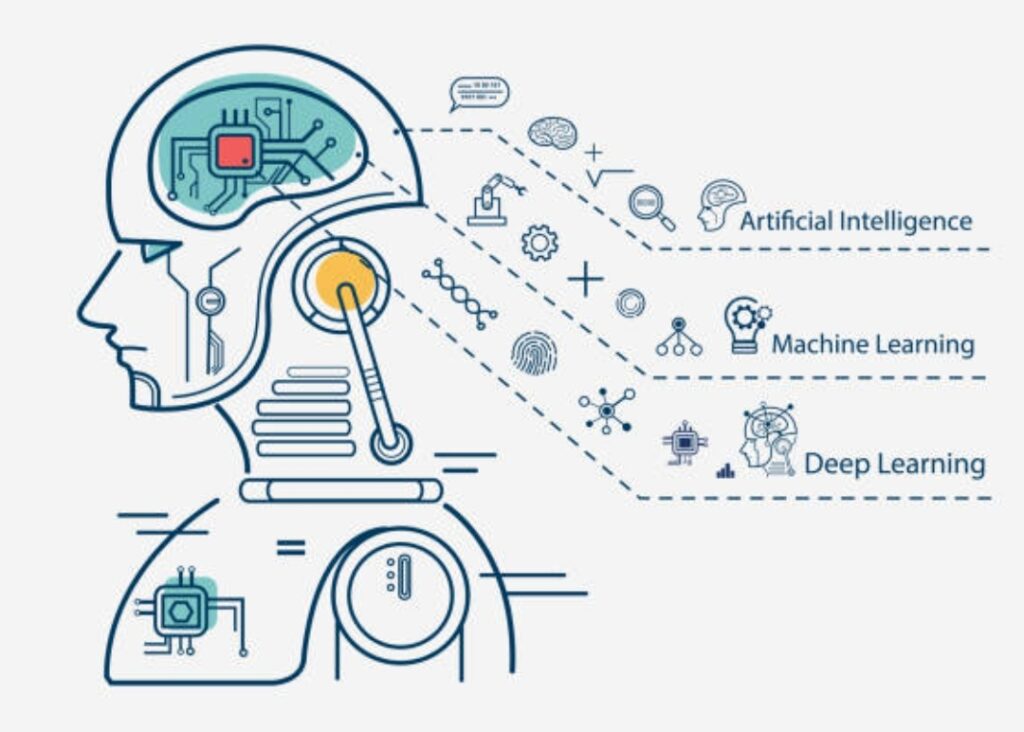
Artificial Intelligence (AI) is a broad field of computer science focused on creating systems that can perform tasks that typically require human intelligence.
This includes problem-solving, reasoning, understanding natural language, vision processing, and even creativity.
Now, here’s where it gets exciting:
Machine learning (ML) is a subset of AI.
It refers specifically to the ability of machines to learn from data, identify patterns, and make decisions with minimal human intervention.
This means AI is the bigger picture, and machine learning is the engine driving many of today’s most powerful AI applications.
From autonomous cars and smart home devices to voice assistants like Alexa and Google Assistant, machine learning is at the core of these technologies.
A good way to look at it:
- AI is the goal — to simulate human thinking.
- ML is the method — the toolset that helps achieve it.
🔥 Power Insight: One of the reasons why machine learning has become a game-changer in recent years is due to the explosive growth in data availability, cloud computing, and open-source tools like TensorFlow and Scikit-Learn.
💡 Machine learning isn’t just for tech giants anymore.
Small businesses, startups, and even personal bloggers can now implement AI-driven strategies — such as personalized email automation, predictive lead scoring, or content optimization tools.
These AI applications are helping industries solve real-world problems faster, more accurately, and at a lower cost.
✅ Fun Fact: Netflix saves over $1 billion per year using machine learning algorithms to recommend content tailored to each user.
Ready to leverage the full potential of machine learning in your own business or daily life?
👉 Check out the best AI tools for beginners here 💼
📊 The Role of Data Analytics in Machine Learning
To truly understand how machine learning works and why it’s so powerful, you need to look at the heart of the engine — data analytics.
Without data, machine learning cannot function.
It’s like trying to teach someone a new language with no examples — impossible.
📌 Data analytics refers to the process of collecting, organizing, analyzing, and interpreting data to uncover meaningful patterns, trends, and insights.
This process is essential because machine learning models learn from data — and the quality and quantity of that data directly affect the accuracy and performance of those models.
Here’s how data analytics powers machine learning applications in everyday life:
🧠 1. Data Collection:
Before a machine can learn, it needs data — and a lot of it.
This data comes from multiple sources such as:
- Website interactions
- Purchase histories
- Social media behavior
- Sensor data from IoT devices
- CRM systems
🛠 2. Data Preprocessing & Cleaning:
Raw data is often messy.
It contains missing values, errors, and outliers that can confuse the algorithms.
Data analytics tools clean and prepare this data so it’s suitable for training machine learning models.
📈 3. Feature Engineering:
This step involves selecting the most relevant variables (features) that help machines learn patterns more effectively.
For example, in a credit card fraud detection system, key features might include purchase amount, location, and time of transaction.
🔄 4. Model Training & Testing:
Now that the data is clean and structured, it’s fed into a machine learning algorithm.
Data analytics is used to evaluate how well the model is performing and fine-tune it by comparing predicted outputs with real-world results.
🎯 5. Real-time Insights & Predictions:
Once deployed, AI applications continuously learn and improve by analyzing new data in real-time — making smarter decisions the more they’re used.
This is what makes AI so dynamic, personalized, and scalable.
⚡ Modern Tip: Many leading platforms like Google Cloud AI, AWS SageMaker, and Azure ML Studio come with integrated data analytics dashboards to help you visualize trends, monitor model performance, and tweak your pipeline effortlessly.
🤖 From e-commerce personalization and voice recognition to financial forecasting and medical diagnostics, data analytics and machine learning go hand-in-hand to power innovations that are revolutionizing how we live and work.
🚀 Want to harness the power of AI for your business or personal growth?
Don’t get left behind — Explore cutting-edge AI tools that require zero coding skills!
✨ Unleash the full power of data with smart, scalable AI applications that work while you slee
🔍 Real-World Applications of Machine Learning
Machine learning isn’t just a buzzword — it’s already embedded in many aspects of our daily lives.
From the apps we use to how we shop, drive, and even receive medical care, machine learning is quietly revolutionizing the way the world works.
Here are some of the most impactful real-world machine learning applications transforming industries and everyday experiences:
🎧 Personalized Recommendations
Ever wonder how Netflix knows exactly what to suggest next?
Or how Amazon predicts what you’ll want to buy?
That’s machine learning in action — analyzing your behavior and comparing it to millions of other users to deliver spot-on recommendations.
✅ Examples:
- Netflix & Spotify: Suggest movies or songs based on your watch/listen history.
- Amazon & eBay: Display products that align with your browsing or purchasing behavior.
- YouTube & TikTok: Personalize video feeds based on your watch time, likes, and interactions.
💡 Why it matters:
Personalized recommendations boost user satisfaction and increase engagement — which is why they’re core to most digital platforms today.
🗣️ Virtual Personal Assistants
AI-powered assistants like Alexa, Siri, and Google Assistant are prime examples of machine learning in everyday life.
They use Natural Language Processing (NLP) and speech recognition to understand your voice, learn your preferences, and improve over time.
✅ Use cases:
- Setting reminders
- Searching the web
- Controlling smart home devices
- Managing calendars and to-do lists
🌟 Pro tip: Many voice assistants now integrate with data analytics platforms to offer insights like:
- “What’s my average commute time?”
- “What were my most-used apps last week?”
🏥 Healthcare Diagnostics and Predictions
The healthcare industry is undergoing a data-driven revolution.
With AI applications in healthcare, doctors and hospitals can now diagnose diseases more accurately and even predict patient outcomes using machine learning models.
✅ Examples:
- AI X-rays and MRIs: Identify signs of cancer, fractures, or tumors faster than radiologists.
- Predictive analytics: Anticipate outbreaks, ICU admissions, or chronic condition flare-ups.
- Telemedicine tools: Use patient data to suggest personalized treatment plans.
📊 Fact: IBM Watson for Health and Google DeepMind are already analyzing medical records to assist doctors in clinical decisions.
💳 Financial Fraud Detection
When your credit card company texts you about “unusual activity” — that’s machine learning at work.
Banks and fintech apps use real-time data analytics to detect patterns, flag suspicious transactions, and protect users from fraud.
✅ Features:
- Unusual purchase behavior detection
- Biometric login authentication (fingerprints/face ID)
- Instant alerts and blocking of suspicious cards
🔐 Outcome:
Machine learning algorithms significantly reduce fraud-related losses by analyzing historical transaction data and comparing it with current activity.

🚗 Autonomous Vehicles
Self-driving cars like those developed by Tesla, Waymo, and Uber AI Labs rely on real-time machine learning models that process massive amounts of data — from road signs to pedestrians and weather conditions.
✅ Key ML applications:
- Object detection
- Lane keeping and traffic awareness
- Collision avoidance
- Route optimization using predictive analytics
📡 Bonus: These systems improve with time, learning from each mile driven — thanks to advanced deep learning and neural networks.
🏡 Smart Homes and IoT Devices
Smart thermostats, lights, cameras, and voice-controlled appliances are everyday examples of AI applications using data analytics to enhance convenience and efficiency.
✅ Smart home ML examples:
- Nest Thermostat: Learns your temperature preferences and adjusts automatically.
- Ring Doorbell: Uses facial recognition to alert you when someone’s at the door.
- Smart fridges & ovens: Recommend recipes, track expiration dates, and more.
💡 Why it’s powerful:
These tools analyze your habits, detect anomalies (like leaving lights on when no one’s home), and help reduce energy bills — all through machine learning and AI.
🧠 Social Media & Content Curation
Ever feel like your Instagram, LinkedIn, or TikTok feed knows you a little too well? That’s machine learning in content delivery.
✅ What’s happening:
- Sentiment analysis to personalize content
- Image and video recognition
- Fake news filtering
- Targeted ad delivery
📊 Fact: Facebook’s algorithm runs over 6 million predictions per second, based on likes, comments, shares, and scrolling behavior.
✅ Key Takeaways:
- Machine learning is everywhere — from your smart speaker to your doctor’s office.
- AI applications are only getting smarter, thanks to ever-growing data and powerful analytics tools.
- Whether you realize it or not, you are benefiting from machine learning and data analytics multiple times a day.
🔥 Want to future-proof your career or business?
Start leveraging the power of machine learning today.
👉 Explore beginner-friendly AI tools here
👉 Download a free ML/AI implementation checklist for your business
🔍 Industry-Specific Impacts of Machine Learning
While machine learning enhances daily conveniences, its deepest impact is being felt across major industries.
By automating decision-making, optimizing workflows, and uncovering hidden insights, AI applications are disrupting traditional systems — in a good way.
Let’s break down how different industries are leveraging machine learning and data analytics to create competitive advantages.

🏥 Healthcare
Machine learning is saving lives — literally.
Hospitals and research institutions are using ML to:
- Detect diseases like cancer, diabetes, and Alzheimer’s at early stages
- Predict patient deterioration using real-time vital signs
- Personalize treatment based on genetic data
- Optimize staffing and reduce wait times
📈 Example:
Google’s DeepMind AI accurately detected over 50 eye diseases from retinal scans with 94% accuracy.
💰 Finance and Banking
In the finance world, data is currency, and machine learning is the key to unlocking value.
Applications include:
- Fraud detection and prevention (real-time monitoring of transactions)
- Credit scoring based on behavioral and social data
- Algorithmic trading and market forecasting
- Personalized banking recommendations via AI chatbots
📊 Case Study: JPMorgan Chase uses ML to review legal documents in seconds — a task that previously took 360,000 hours annually.
🛍️ Retail and E-commerce
Retailers are using machine learning and data analytics to predict what you want to buy — before you even know it.
ML tools help businesses:
- Forecast inventory demands
- Personalize product recommendations
- Optimize supply chain logistics
- Enhance customer service with chatbots
📦 Real-World Use:
Walmart and Target use ML to manage thousands of SKUs, optimize pricing in real time, and streamline delivery routes.
🏭 Manufacturing
Smart factories are powered by predictive analytics and real-time ML models.
ML use cases in manufacturing:
- Predictive maintenance: Identify machine failures before they happen
- Supply chain optimization
- Automated quality control using computer vision
- Energy consumption forecasting
🏗️ Example: General Electric uses machine learning to save $1.5B annually in operational efficiencies.
🎓 Education
In the age of personalized learning, AI-driven platforms are helping educators understand how students learn best.
Machine learning in education:
- Personalized lesson plans
- Automated grading and feedback
- Dropout prediction models
- Language learning assistants using NLP
📚 Tool Highlight:
Platforms like Coursera, Duolingo, and Khan Academy use ML to adjust content difficulty in real time based on user performance.
⚙️ Logistics and Supply Chain
AI and ML are reshaping the logistics industry by increasing efficiency and reducing costs.
Benefits include:
- Route optimization using real-time data
- Inventory demand forecasting
- Automated warehouse robotics
- Risk assessment in global shipping
🚚 Example:
DHL uses ML to predict delays and reroute deliveries for maximum efficiency, saving millions in transit costs.
🌍 Environmental Sustainability
Machine learning is now helping fight climate change.
Applications include:
- Monitoring deforestation using satellite data
- Predicting extreme weather patterns
- Optimizing energy use in smart buildings
- Identifying pollution hotspots using sensor data
🌱 Innovation Highlight:
IBM’s Green Horizon project uses ML to forecast air pollution and guide urban planning decisions.
✅ Key Takeaways:
- Machine learning is not one-size-fits-all — its power lies in industry-specific customization.
- The most successful businesses today are data-driven and AI-augmented.
- Whether you’re in healthcare, finance, education, or retail, AI applications and data analytics can supercharge your operations.
Ready to transform your industry with the power of machine learning?
Don’t wait — your competitors already are.
👉 Get our free AI Industry Use Case Toolkit
👉 Schedule a strategy call to explore AI integration
⚙️ How Machine Learning Works (Simplified for Everyone)
To understand how machine learning powers all these applications, it helps to know the basics — without the complex math.
Here’s a simple breakdown of how machine learning works:

🧠 Step 1 – Collecting Data
Every ML system starts with data. Lots of it.
Examples of training data:
- Images (e.g., for facial recognition)
- Text (e.g., for spam filters)
- User behavior (e.g., for recommendation engines)
The better and cleaner the data, the smarter the model.
🔍 Step 2 – Training the Model
This is where the system learns.
Algorithms like:
- Linear Regression (for predictions)
- Decision Trees (for classification)
- Neural Networks (for deep learning)
…are used to identify patterns from the data and “learn” from it.
📊 Step 3 – Making Predictions
Once trained, the model can predict outcomes based on new inputs.
Examples:
- Will this loan applicant default?
- Is this image a cat or a dog?
- What product will this customer likely buy next?
These predictions get more accurate over time with more data and feedback.
♻️ Step 4 – Continuous Learning
ML models improve with feedback.
When predictions are right or wrong, they relearn and adapt, just like a human brain — only faster.
This feedback loop is powered by data analytics and performance tracking.
Want to see machine learning in action?
👉 Try out beginner tools like Google Teachable Machine or ChatGPT’s code interpreter to build basic ML models — no coding needed.
⚠️ Challenges and Ethical Concerns in Machine Learning
While machine learning brings unmatched benefits, it also raises serious technical, ethical, and societal concerns.
Understanding these challenges is essential — not just for developers, but for businesses and everyday users too.

⚖️ Bias and Fairness
Machine learning models are only as fair as the data they’re trained on.
Problem:
If historical data includes biases (racial, gender, socioeconomic), the ML model may learn and perpetuate them.
✅ Real Example:
Facial recognition algorithms have shown higher error rates for women and people of color due to imbalanced training data.
🔐 Data Privacy and Security
AI systems often rely on sensitive personal data — from health records to purchase history.
Key Concerns:
- Who owns the data?
- How is it protected?
- Can it be misused or sold?
🔍 Regulations to note:
- GDPR (Europe)
- CCPA (California)
- HIPAA (U.S. healthcare)
🧠 Explainability (The “Black Box” Problem)
Some ML models, especially deep learning, are complex and opaque.
Problem:
Even developers might not fully understand why a model made a certain decision — especially dangerous in healthcare, finance, or legal applications.
✅ Solution: Use explainable AI (XAI) frameworks to improve transparency and accountability.
⚙️ Job Displacement and Automation
AI and automation are reshaping the job market.
Concerns:
- Displacement of low-skill and repetitive jobs
- Need for massive workforce retraining
- Emerging AI-driven careers (e.g., prompt engineers, AI ethicists)
🧩 The Reality:
ML won’t replace humans — but humans who use AI will replace those who don’t.
☠️ Misinformation and Deepfakes
AI-generated content (text, audio, video) can spread misinformation, impersonate voices, or even fabricate events.
Example:
- Deepfake videos influencing elections
- AI-written fake news articles
- Malicious chatbots used for scams
✅ Solution: Use AI detection tools and enforce ethical AI usage policies.
✅ Summary:
- Bias, privacy, and transparency are major concerns in machine learning.
- Governments, developers, and users must work together to build responsible AI systems.
- Ethical AI is not just an option — it’s a requirement for trust and long-term success.
Want to build or use AI responsibly?
👉 Download our Free AI Ethics Checklist for Businesses
👉 Explore 5 Ethical AI Tools You Can Use Today
🚀 Getting Started with Machine Learning: Tools, Courses & Resources
Whether you’re a complete beginner or looking to deepen your skills, here’s how you can start your journey with machine learning — with tools, platforms, and learning resources anyone can use.

🛠️ Beginner-Friendly Tools and Platforms
These tools allow you to build, train, and test ML models — often without writing a single line of code.
Top Tools:
- Teachable Machine (by Google): Great for image/sound recognition without code
- Microsoft Azure ML Studio: Drag-and-drop interface to train models
- Google Colab: Run ML code in your browser using Python and TensorFlow
- BigML: Interactive visualizations, easy for newcomers
🎓 Top Machine Learning Courses (Free & Paid)
Want to learn how ML really works? These are the best-rated courses:
- Coursera: “Machine Learning” by Andrew
Stanford-backed, beginner-friendly, and free to audit - Fast.ai Practical Deep Learning
Hands-on, code-first approach to real-world ML problems - Google AI Learn
Free beginner-level content created by Google engineers - Harvard’s CS50 AI on edX
A rigorous course that explores AI in games, NLP, and more
📚 Essential Reading & Resources
- Books:
- “Hands-On Machine Learning with Scikit-Learn, Keras & TensorFlow” – Aurélien Géron
- “The Hundred-Page Machine Learning Book” – Andriy Burkov
- “AI Superpowers” – Kai-Fu Lee
- “Hands-On Machine Learning with Scikit-Learn, Keras & TensorFlow” – Aurélien Géron
- Communities & Forums:
- Reddit: r/MachineLearning
- Stack Overflow (tag: machine-learning)
- Kaggle Discussions (for challenges and tutorials)
- Reddit: r/MachineLearning
🧩 Bonus – Learn by Doing (Kaggle & GitHub Projects)
Kaggle is the #1 platform for:
- Competing in real-world ML problems
- Sharing and studying public ML datasets
- Collaborating on AI applications and data analytics problems
GitHub is the best place to:
- Find open-source ML code
- Clone and tweak real-world projects
- Build your own ML portfolio
✅ Key Takeaway:
You don’t need a PhD to get into machine learning.
With the right tools, resources, and curiosity, anyone can explore the power of AI applications and data analytics — starting today.
Ready to dive in?
Start your machine learning journey now — no code, no excuses.
👉 Download our “ML Starter Kit for Beginners” (Free)
👉 Subscribe for weekly AI + Data tutorials delivered to your inbox
🔮 The Future of Machine Learning in Daily Life
As machine learning continues to evolve, its daily presence in our lives will only deepen
From smarter homes to predictive healthcare and hyper-personalized digital experiences, the future is being shaped by data and algorithms — often invisibly, yet powerfully.
Here’s a glimpse of what’s next.

🧠 Hyper-Personalized Experiences
Machine learning is moving from general automation to deep personalization.
Expect:
- Smart assistants that understand emotional tone and intent
- Retail experiences tailored to your mood, preferences, and location
- Streaming platforms that evolve with your behavior in real time
🏡 Smarter Homes and Cities
From energy savings to safety, ML is central to the next generation of smart living.
Examples:
- Homes that learn your routines and adjust lighting, heating, or music
- Cities optimizing traffic in real time using AI applications and data analytics
- Automated emergency response powered by predictive systems
⚕️ Preventive and Predictive Healthcare
Machine learning will shift healthcare from reactive to proactive.
We’ll see:
- Wearables that detect health issues before symptoms show
- AI-driven virtual doctors offering instant, accurate diagnostics
- Personalized medicine based on genetic and lifestyle data
🔐 AI Ethics, Regulation, and Human-AI Collaboration
As ML becomes more powerful, ethical guardrails and human oversight will be essential.
Trends to watch:
- Global frameworks for AI governance and fairness
- Expansion of Explainable AI (XAI) to ensure transparency
- AI becoming a collaborator, not just a tool — assisting humans in creative and critical tasks
🌐 The Democratization of AI
Soon, every business and creator — regardless of size — will access powerful AI tools.
Expect:
- No-code/low-code platforms for building custom ML apps
- AI assistants for writing, coding, designing, and marketing
- ML tools embedded into everyday software (Google Docs, Excel, Canva)
✅ Key Takeaway:
The future of machine learning is human-centric.
It’s not about replacing people — it’s about augmenting our capabilities and enhancing our daily lives through intelligent, data-driven decisions.
Are you prepared for the AI-driven future?
Don’t just witness the change — be part of it.
👉 Subscribe now to get future-proof ML insights delivered to your inbox!
👉 Grab our “Future of AI” trend report — free for a limited time!
✅ Conclusion – Why Machine Learning Matters More Than Ever
Machine learning is no longer a futuristic concept — it’s the engine quietly powering your apps, devices, businesses, and decisions.
From personalized recommendations to predictive healthcare, ML is deeply woven into our everyday experiences. And as data becomes more abundant, the power of AI applications and data analytics will only grow.
Whether you’re a business owner, developer, or curious learner, now is the time to embrace the shift. Understand it. Experiment with it. Build with it. The future belongs to those who leverage machine learning responsibly and creatively.

✨ Final Thoughts:
- Machine learning is already transforming daily life, industries, and society.
- It’s essential to address its ethical challenges and ensure human-centered innovation.
- With the right tools and mindset, anyone can begin using ML today.
Ready to apply machine learning in your own life or business?
👉 Download our Ultimate Beginner’s Guide to ML Tools & Courses – Free Today!
👉 Join our newsletter to stay updated on AI trends that matter.
You might also like :