
Introduction — Why AI Voice-Cloning Scams Are Becoming a Global Threat
AI voice-cloning scams are no longer futuristic concepts—they are real, rising fast, and targeting everyday people across the world.
In the last few years, artificial intelligence has become powerful enough to mimic a person’s voice with shocking accuracy, even when the scammer has access to only a few seconds of audio.
This rapid evolution of deepfake technology has created a new wave of digital threats, making voice-based fraud one of the most concerning cybercrimes today.
As scammers grow more sophisticated, learning how to prevent AI voice clone scams has become a critical part of modern digital safety.

Whether you’re a parent, business owner, student, senior citizen, or simply someone who shares videos or voice notes online, you could become a target—often without even realizing it.
This makes deepfake scam prevention more important than ever, especially as criminals use cloned voices to trick families, imitate corporate executives, and manipulate victims into sending money or sharing sensitive information.
One of the biggest reasons these scams are so effective is emotional pressure.
A cloned voice can trigger panic, urgency, and fear, especially when it sounds like someone you trust deeply.
This is why scammers often use phrases like “I’m in trouble,” “I need help immediately,” or “Don’t tell anyone”—phrases designed to shut down logical thinking and create a sense of emergency.
Understanding how these psychological tricks work is a powerful first step in voice cloning protection, letting you stay alert even in highly emotional situations.
Another issue is how easily scammers can capture your voice today.
A simple TikTok video, YouTube clip, livestream, podcast, WhatsApp voice note, or even a short voicemail message can provide enough audio for cloning.
This means everyone who is active online—even casually—is potentially exposed.
The goal of this guide is to help you stay ahead of these threats by equipping you with the most current, practical, and effective strategies to shield yourself and your loved ones.
In this article, we’ll break down everything you need to know—from how voice cloning works, to the warning signs of an ongoing scam, to the exact steps you can take right now to block these attacks.
You’ll also learn how major platforms, smartphone systems, and modern security tools are responding to this problem and what you can do to enhance your digital safety even further.
If you’re looking for reliable, up-to-date information on how to protect your identity, secure your communications, and stay ahead of cybercriminal tactics, you’re in the right place.
And if you want extra peace of mind, consider exploring advanced tools such as AI call screening apps, identity protection services, or cybersecurity monitoring tools to build a stronger shield against these modern threats.
Stay alert, stay informed, and stay protected—your voice is one of your most personal assets, and safeguarding it is more important now than ever.
Keep reading to discover exactly how you can defend yourself from the next wave of AI-driven scams and take control of your digital safety today.
👉 Don’t wait until scammers target you—take action now.
Strengthen your security, educate your family, and use the strategies in this guide to keep your digital world safe.
What Are AI Voice-Cloning Scams? — Understanding How Deepfake Scammers Exploit Your Voice
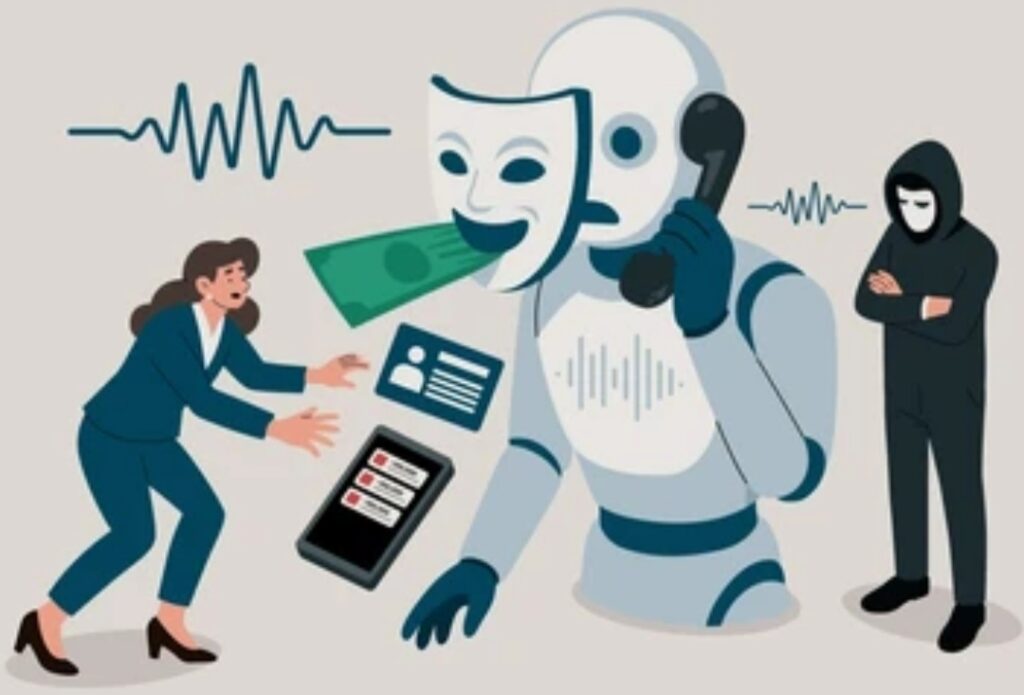
AI voice-cloning scams are a new form of digital fraud where criminals use artificial intelligence to recreate someone’s voice and use it to deceive others.
This technique, often referred to as AI voice synthesis or deepfake audio, allows scammers to mimic the tone, accent, rhythm, and emotional patterns of a real person with surprising accuracy.
Even worse, the scammers only need a few seconds of audio to create a convincing clone, making this type of fraud dangerously easy to execute.
At its core, an AI voice-cloning scam is designed to manipulate trust.
Scammers know that when you hear the familiar voice of someone you love—your child, parent, partner, or friend—you’re more likely to react quickly without verifying the situation.
This emotional shortcut is exactly what makes deepfake scams so powerful and so successful across the world.
These scams usually follow a common pattern.
A cybercriminal scrapes your voice from public sources such as social media videos, livestreams, or voice messages.
They then feed that audio into an AI model capable of generating a realistic voice clone.
Next, they use that cloned voice to impersonate you—or someone close to you—to demand money, personal information, or financial access.
For example, a scammer might call your parents using an AI-generated version of your voice, pretending to be in trouble and urgently asking for funds.
Or they might clone the voice of a company executive to trick employees into transferring money or sharing internal documents.
In many cases, these scams are fast, unexpected, and deliberately designed to create panic and confusion.
Because voice cloning technology has become widely accessible, criminals no longer need advanced skills to create convincing audio deepfakes.
With just a few clicks, they can produce a voice clone that sounds authentic enough to fool even close family members.
This is why learning how to prevent AI voice clone scams is no longer optional—it is a necessity for modern digital safety.
Another reason these scams are so dangerous is that victims often do not realize they’ve been tricked until it’s too late.
The emotional intensity of hearing a distressed voice you trust can overwhelm your ability to think logically or verify the caller’s identity.
This psychological vulnerability is exactly what scammers prey on, and it is why deepfake scam prevention strategies must include both technical tools and emotional awareness.
In many cases, the scammer’s script is designed to push you into immediate action.
They may ask you not to hang up, not to tell anyone, or not to call back through another number.
These pressure tactics are red flags—but during stressful moments, many people overlook them.
Understanding these behaviors makes you significantly more resilient to voice-based fraud.
One important point to remember is that voice cloning is not limited to high-profile individuals or celebrities.
Ordinary people are increasingly becoming targets simply because their voices are available online in some form.
If you’ve ever posted a birthday video, recorded a vlog, left a voicemail, or sent a voice note, you’ve already shared enough audio for cloning.
This is why voice cloning protection has become a crucial part of personal cybersecurity.
AI voice-cloning scams are also evolving rapidly.
Criminals now combine cloned voices with spoofed caller IDs, hacked social media accounts, and stolen personal information to create scams that appear highly convincing.
The merging of multiple technologies means that old-school scam-prevention methods are no longer enough on their own.
Modern security requires a mix of awareness, verification habits, digital hygiene, and smart tools.
In the next section, you’ll learn exactly how scammers clone voices, what tools they use, and how they gather the audio samples that make these scams possible.
Understanding how the process works will give you the knowledge you need to stay alert, recognize early warning signs, and protect yourself from manipulation.
👉 Stay informed and stay protected—awareness is the first line of defense against any deepfake or voice-cloning attack.
Keep reading to uncover how scammers clone voices and what you can do to avoid being their next target.
How Scammers Clone a Voice — The Technology Behind Deepfake Audio Scams
AI voice cloning may sound like science fiction, but it is now very real, sophisticated, and surprisingly easy for scammers to misuse.
Understanding the technology behind voice cloning is crucial for anyone who wants to prevent AI voice clone scams and protect personal and financial information.
At its core, voice cloning involves recording, analyzing, and reproducing the unique characteristics of a person’s voice.
Modern AI models, especially those using deep learning and neural networks, can learn the pitch, tone, accent, cadence, and even breathing patterns of an individual’s speech.
With just a few minutes—or in some cases, only a few seconds—of audio, these algorithms can generate speech that is almost indistinguishable from the real voice.
Scammers usually follow a step-by-step process to create a voice clone:
Step 1 — Collecting Audio Samples
- Scammers gather publicly available recordings from social media, YouTube videos, podcasts, or even voicemail messages.
- Short clips are often enough because AI models can extrapolate patterns to generate new speech.
- The more diverse the audio (different emotions, tones, and contexts), the more convincing the cloned voice will be.
Step 2 — Training the AI Model
- The collected audio is fed into a voice synthesis model.
- This model learns the unique vocal traits and replicates how the person pronounces words, their tone, rhythm, and speech idiosyncrasies.
- Advanced models can even mimic emotions, making the cloned voice sound stressed, calm, happy, or urgent depending on the scammer’s goals.
Step 3 — Generating Fake Messages
- Once the AI model is trained, scammers can create realistic audio messages on demand.
- These messages can ask for money, sensitive data, or other forms of compliance, often in the exact voice of someone the victim trusts.
- Voice cloning combined with spoofed caller IDs or hacked accounts makes these scams extremely convincing.
Step 4 — Delivery and Exploitation
- The cloned voice is delivered through phone calls, voice messages, or even automated voicemail systems.
- In many cases, the scammer will simulate urgency or distress to pressure victims into immediate action.
- This combination of emotional manipulation and technological authenticity is what makes deepfake scams so dangerous.
The rise of AI tools for voice cloning means that almost anyone can be targeted.
Even casual online activity, such as posting a video on Instagram or leaving a voice message, can provide enough material for scammers.
This is why voice cloning protection must start with controlling how and where you share your audio online.
It’s also important to understand that scammers are constantly improving.
Early AI clones often sounded slightly robotic or unnatural, but today’s deepfake voices are nearly flawless, making them much harder to detect.
In response, experts in cybersecurity and AI ethics are developing detection tools to identify subtle anomalies in speech that humans might not notice.
Using these tools in combination with good personal habits is one of the most effective ways to prevent falling victim to these scams.
To stay ahead of this threat, you should also learn to identify the behavioral patterns that scammers use alongside AI voice cloning.
This includes sudden requests for financial help, unusual phrasing, insistence on secrecy, and refusal to communicate through verified channels.
Recognizing these red flags is part of a comprehensive deepfake scam prevention strategy.
In the next section, we’ll cover the warning signs that indicate you’re being targeted by an AI voice-cloning scam and what immediate steps to take to protect yourself and your family.
Understanding these warning signs early can save you from emotional stress, financial loss, and identity theft.
⚠️ Pro Tip: Even if a voice sounds exactly like someone you trust, always verify through a separate channel before taking any action.
This simple habit is one of the most effective ways to prevent AI voice clone scams.
Warning Signs You’re Being Targeted by AI Voice-Cloning Scams — How to Spot Deepfake Fraud Early
Recognizing the warning signs of an AI voice-cloning scam is one of the most important steps in protecting yourself, your family, and your finances.
Because these scams rely on a cloned voice you trust, they are designed to trigger emotional responses—panic, fear, urgency, and sometimes guilt.
If you know what to look for, you can detect a scam before it escalates and take decisive action to prevent being manipulated.
1. Unexpected Calls or Messages from Trusted Voices
- One of the first red flags is receiving a call or voice message from someone you know that seems unusual or unexpected.
- Even if the voice sounds perfectly real, the context may feel off—such as calling at odd hours or asking for unusual favors.
- Always remember: scammers can clone voices without the person’s knowledge, so trust the situation, not just the voice.
2. Urgent or Panicked Requests
- AI voice-cloning scams often rely on creating a sense of urgency.
- Scammers may ask for money immediately, pressure you to make quick decisions, or insist you act without consulting anyone else.
- Phrases like “I’m in trouble,” “You must act now,” or “Don’t tell anyone” are classic warning signs.
- This is why deepfake scam prevention requires both technological awareness and emotional caution.
3. Refusal to Communicate Through Verified Channels
- A cloned voice might insist you don’t call back the official number or avoid video calls.
- Scammers want to control the communication channel to maintain the illusion of authenticity.
- Always verify identity by contacting the person directly through a separate, trusted platform.
4. Requests for Money, Personal Data, or Sensitive Information
- Any sudden demand for bank transfers, cryptocurrency, gift cards, passwords, or personal identification is a major red flag.
- Scammers use the cloned voice to bypass rational thinking, exploiting trust to gain financial or personal access.
- This makes awareness and voice cloning protection strategies critical to preventing losses.
5. Slightly Unnatural Speech or Subtle Audio Differences
- Even the most sophisticated AI-generated voices may have tiny anomalies, like unnatural pauses, odd intonations, or slightly robotic undertones.
- Learning to recognize these subtle cues can give you an extra layer of protection against deepfake scams.
- Audio that seems “off” but emotionally compelling should always trigger verification before action.
6. Context Does Not Match Behavior
- Scammers may use the cloned voice to simulate normal behavior while requesting abnormal actions.
- If someone’s voice seems authentic but their request is strange, inconsistent, or out of character, it’s likely a scam.
- Trust your intuition and confirm before reacting.
7. Cross-Platform Verification
- Some scammers use cloned voices across multiple platforms—phone, WhatsApp, Messenger, email.
- Always cross-check with the person using a verified channel or face-to-face conversation if possible.
- This is a practical tip for both deepfake scam prevention and long-term digital security.
⚡ Expert Tip:
Keeping a mental checklist of these warning signs and educating your family or team about them can drastically reduce the risk of falling victim to AI voice-cloning scams.
Implementing these habits is a crucial part of voice cloning protection.
Why Awareness Alone Isn’t Enough
- While recognizing red flags is essential, scammers can still manipulate highly trusting individuals.
- Combining awareness with technical solutions, like multi-factor verification, secure communication tools, and call-screening apps, is the best defense.
- Using a layered approach—emotional awareness plus technological safeguards—dramatically improves your chances of avoiding scams.
In the next section, we’ll cover exact steps you can take to prevent AI voice clone scams, including actionable tips, tools, and routines that can protect your identity and finances.
By implementing these strategies, you’ll be able to stop scammers before they have a chance to exploit your voice.
How to Prevent AI Voice Clone Scams — Practical Steps for Voice Cloning Protection
Preventing AI voice-cloning scams requires a combination of awareness, technical safeguards, and proactive habits.
By implementing these strategies, you can significantly reduce the risk of falling victim to deepfake fraud.
Below, we break down the most effective ways to achieve comprehensive voice cloning protection.
1. Limit the Sharing of Your Voice Online
- One of the simplest yet most effective steps is controlling where your voice appears online.
- Avoid posting long video or audio clips on social media, livestreams, or public forums.
- Even short clips or voice notes can be enough for scammers to create a cloned voice.
- Using privacy settings to restrict who can see or hear your content adds an extra layer of deepfake scam prevention.
- Encourage family members, especially teens, to be cautious with sharing voice recordings publicly.
2. Implement Verification Protocols With Trusted Contacts
- Establish a secret word, code, or phrase that only your close contacts know.
- Whenever someone asks for urgent financial help or sensitive information, verify the request using the code.
- This technique works even if the scammer has perfectly cloned a voice.
- Multi-step verification is one of the most reliable methods to prevent AI voice clone scams in real-life scenarios.
3. Use Multi-Factor Authentication (MFA)
- Enable MFA on all financial, email, and social media accounts.
- Even if a scammer convinces you to share a password over the phone, MFA can prevent unauthorized access.
- This creates a strong security layer that complements behavioral awareness.
4. Educate Your Family and Colleagues
- Awareness is a powerful tool in the fight against AI scams.
- Teach your household members, especially seniors and teens, the warning signs of voice cloning scams.
- Roleplay possible scam scenarios so everyone knows how to respond.
- Education paired with actionable protocols greatly increases voice cloning protection.
5. Use Technology to Screen Calls
- Install call-screening or AI-based scam detection apps on your phone.
- Many modern carriers offer services that detect suspicious numbers or patterns.
- These tools provide an extra security layer, especially against automated voice-cloning attacks.
- Combining technological safeguards with personal vigilance maximizes deepfake scam prevention.
6. Cross-Check Unusual Requests
- Never act solely based on a voice you recognize.
- If someone calls asking for urgent money, sensitive data, or account access, verify through another channel:
- Call their official number
- Send a secure message
- Meet in person if possible
- Call their official number
- Cross-checking before taking action is the single most effective habit to prevent AI voice clone scams.
7. Maintain Digital Hygiene
- Regularly review your social media privacy settings.
- Remove unnecessary public voice and video content.
- Use strong, unique passwords for every account.
- Keep your devices updated with the latest security patches.
- Proper digital hygiene is a foundational practice in both voice cloning protection and broader cybersecurity.
8. Report Suspicious Calls Immediately
- If you suspect a cloned voice is being used to scam you, report it to authorities or your service provider immediately.
- Provide any available evidence, such as call recordings or messages.
- Early reporting can help prevent scammers from targeting others and may allow authorities to track and stop them.
💡 Pro Tip:
Combine behavioral awareness with technical safeguards to build a layered defense.
Even if scammers are sophisticated, this multi-step approach drastically reduces your risk.
Remember: Your voice is a personal asset. Treat it like you would your passwords or credit cards.
Start today by limiting shared audio, setting up verification codes, and enabling multi-factor authentication.
Protect your voice, protect your money, and safeguard your digital identity!
Tools & Technologies That Help Protect You From Voice-Cloning Scams — Modern Digital Defenses
In addition to awareness and behavioral strategies, modern technology offers powerful tools to enhance your voice cloning protection.
These tools are designed to detect, block, or minimize the risk of AI voice-cloning scams, giving you peace of mind and an added layer of security.

1. AI-Powered Call Screening Apps
- Many smartphone carriers and third-party apps now use AI to identify suspicious calls.
- These apps can detect unusual call patterns, spoofed numbers, and potential deepfake audio attempts.
- Popular options include Truecaller, Hiya, and carrier-based spam detection services.
- Using these tools can significantly reduce the risk of falling for an unexpected AI voice-cloning scam.
2. Voice Authentication and Biometric Tools
- Some platforms offer voice authentication that can detect anomalies in speech patterns.
- For businesses, voice biometrics can confirm if a person’s voice matches historical data before completing transactions.
- Individuals can benefit indirectly by using services that require verification codes or secondary authentication, rather than trusting voice alone.
3. Multi-Factor Authentication (MFA)
- MFA is essential for financial accounts, email, and social media platforms.
- Even if a scammer uses a cloned voice to request sensitive information, MFA prevents unauthorized access.
- This is a simple yet highly effective layer of deepfake scam prevention.
4. Privacy Controls on Social Media
- Limit access to voice and video content to trusted contacts only.
- Platforms like Instagram, TikTok, and YouTube allow privacy settings to restrict who can view or download your content.
- Regularly reviewing these settings reduces the chances of scammers obtaining audio clips for cloning.
5. AI Deepfake Detection Tools
- Emerging software can analyze audio and detect subtle anomalies that may indicate deepfake manipulation.
- While not perfect, these tools can flag suspicious recordings and help verify authenticity before you act.
- Examples include Deepware Scanner and other AI detection platforms designed for consumer and enterprise use.
6. Secure Communication Platforms
- Using end-to-end encrypted messaging apps adds a layer of security when verifying important requests.
- Platforms such as Signal, WhatsApp with verification codes, or business communication tools with encryption reduce the risk of voice-cloning attacks.
- Always verify unusual requests through these secure channels before taking any action.
7. Device-Level Security Measures
- Keep your devices updated with the latest security patches.
- Enable features like biometric locks, device encryption, and automatic spam detection.
- These measures prevent hackers from accessing your personal audio files and reduce the risk of them being used in a voice-cloning scam.
Key Takeaway
- No single tool is enough on its own.
- The most effective voice cloning protection comes from a combination of awareness, habits, and technological safeguards.
- Layered security—behavioral awareness plus AI detection, MFA, and privacy controls—dramatically reduces your risk of falling victim.
⚡ Pro Tip:
Integrate multiple tools and security practices today to build a comprehensive defense.
The sooner you act, the better your chances of avoiding these scams entirely.
Your voice is valuable; protecting it should be treated with the same seriousness as protecting your money or digital identity.
What to Do If You Suspect a Voice-Cloning Scam — Immediate Steps to Protect Yourself
Even with all precautions, you might still encounter a situation where a cloned voice is being used to target you.
Knowing exactly what to do in these moments can prevent financial loss, emotional stress, and further exposure.
Implementing a clear response plan is a crucial part of deepfake scam prevention and overall voice cloning protection.
1. Stay Calm and Do Not Act Immediately
- Scammers rely on panic and urgency to manipulate victims.
- If a voice sounds distressed or demands immediate action, take a deep breath and do not respond impulsively.
- Pausing before acting gives you the mental clarity to evaluate the situation and protect your personal information.
2. Verify Through a Trusted Channel
- Contact the person directly using a separate method—call their official number, send a secure message, or speak in person.
- Never trust the cloned voice alone, even if it sounds perfect.
- Asking verification questions only your trusted contacts would know is an effective method to confirm authenticity.
3. Avoid Sharing Sensitive Information
- Do not provide passwords, bank details, or personal identification over the phone.
- Scammers often use cloned voices to extract such information quickly.
- Protecting your data is essential for prevent AI voice clone scams and preventing identity theft.
4. Record Evidence if Safe to Do So
- If possible, record the call or save messages from the suspicious voice.
- These recordings can help authorities investigate the scam and prevent further attacks.
- Always ensure you comply with local laws regarding recording phone calls.
5. Report the Scam to Authorities
- Report incidents to local law enforcement, cybersecurity authorities, or consumer protection agencies.
- Contact your phone carrier or platform provider to flag the suspicious call or account.
- Early reporting not only protects you but helps prevent the scammer from targeting others.
6. Inform Friends, Family, or Employees
- If you manage a team, educate colleagues about the incident and its warning signs.
- Share the experience with family members to raise awareness and help them avoid similar attacks.
- Community awareness is a key part of deepfake scam prevention.
7. Strengthen Your Digital Security
- After a suspected scam attempt, update all passwords and enable multi-factor authentication.
- Review social media and cloud storage privacy settings to reduce exposure of voice data.
- This reinforces your voice cloning protection for the future and reduces the likelihood of repeated attacks.
Key Takeaway
- Immediate action combined with verification and reporting is critical.
- By staying calm, following verification steps, and using proper reporting channels, you can minimize both emotional and financial damage.
- Treat any unexpected or urgent voice-based request with skepticism—this mindset is one of the most effective defenses against AI voice-cloning scams.
⚡ Pro Tip:
If you suspect a cloned voice is targeting you, take action immediately but wisely.
Verify first, report second, and educate your network to strengthen overall protection.
Final Tips to Stay Safe From Voice-Cloning Scams — Strengthen Your Digital Defense
Staying safe from AI voice-cloning scams requires consistent vigilance, smart habits, and the use of modern technology.
By combining awareness, prevention strategies, and the right tools, you can significantly reduce your risk and protect both your finances and your personal identity.
1. Treat Your Voice as Personal Data
- Your voice is unique and can be used to identify you, just like a password or biometric data.
- Limit public sharing of audio or video content, especially anything that contains your full name or sensitive information.
- Being cautious about what you post online is the foundation of voice cloning protection.
2. Keep Up With Technology and Scams
- Scammers constantly evolve their techniques using the latest AI tools.
- Stay informed about new scams, deepfake technologies, and security updates.
- Follow reputable cybersecurity blogs, news, and alerts to maintain an up-to-date defense.
- Proactive learning is a crucial part of deepfake scam prevention.
3. Educate Your Network
- Talk to family members, friends, and colleagues about AI voice-cloning scams.
- Share the warning signs and verification methods you’ve learned.
- Encouraging collective awareness strengthens the security of everyone in your network.
4. Use a Multi-Layered Security Approach
- Combine behavioral habits with technical safeguards.
- Use AI call-screening apps, multi-factor authentication, and secure communication platforms.
- Keep devices updated and regularly review privacy settings on social media.
- Layered security is the most effective approach to prevent AI voice clone scams.
5. Develop a Response Plan
- Have a clear action plan if you or someone you know is targeted.
- Steps should include staying calm, verifying through trusted channels, documenting the incident, and reporting to authorities.
- Practicing this plan in advance ensures faster, smarter responses and reduces the risk of being manipulated.
6. Trust but Verify
- Even if a voice sounds authentic, always double-check the request through an independent method.
- Never rely solely on what you hear, especially in situations involving money, passwords, or sensitive information.
- Verification is the final line of defense and a critical principle in voice cloning protection.
Key Takeaway
- AI voice-cloning scams are evolving, but you are not powerless.
- Awareness, verification, technical safeguards, and education form a comprehensive shield against these threats.
- By treating your voice as sensitive data and staying vigilant, you can avoid becoming a victim and protect your personal and financial security.
Start implementing these strategies today—limit shared audio, educate your family, enable multi-factor authentication, and use AI detection tools.
Protect your voice, defend your identity, and take control of your digital safety now!
You might also like :